 Store

 EN
 CN
 VI
 IT
 ES
 TH
 JA
 PT
 MS
 KO
 FR
 DE
 ID
As robotic systems become smaller and more functionally integrated, the design of individual joint components has become increasingly important. A robotic joint must accommodate the motor, transmission mechanism, position feedback components, electrical connections, and structural supports within a limited installation space. These requirements create challenges for conventional motor winding and assembly methods, particularly when designers need to maintain precise motion control without increasing the overall dimensions of the joint.
High-Density Interconnect (HDI) Printed Circuit Board winding technology provides an alternative approach to motor integration. By using carefully designed conductive patterns and multilayer circuit structures, HDI-based winding can help organize electromagnetic components within a compact motor architecture. This approach is particularly relevant to miniature joint actuators, where internal space is limited and component integration directly affects the overall mechanical layout.
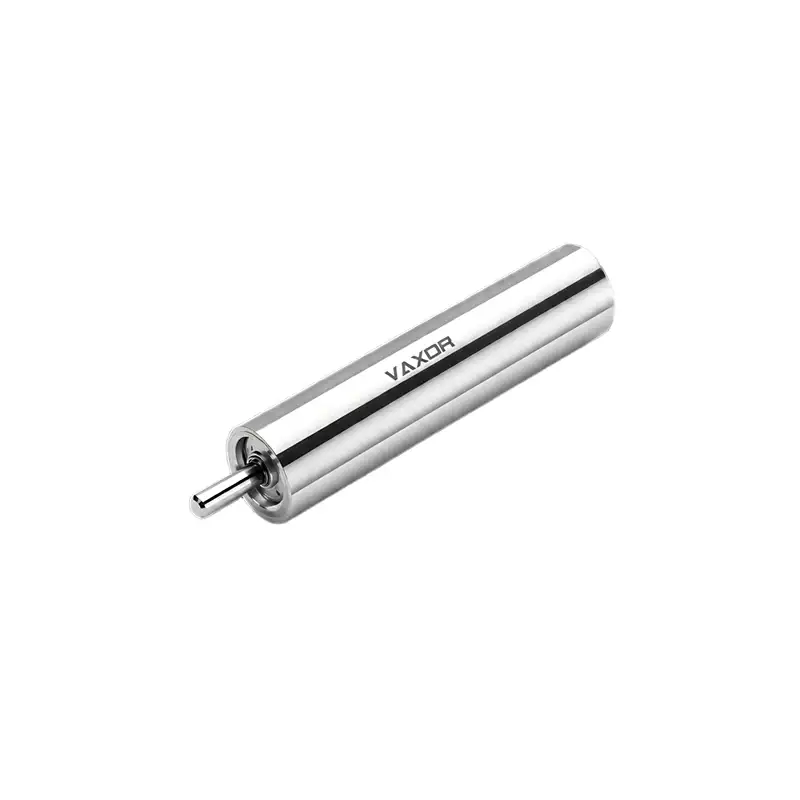
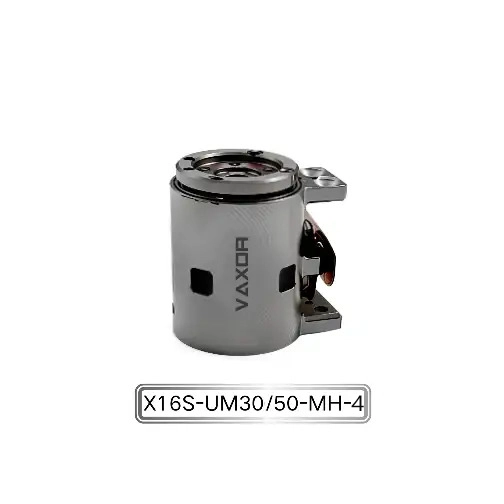
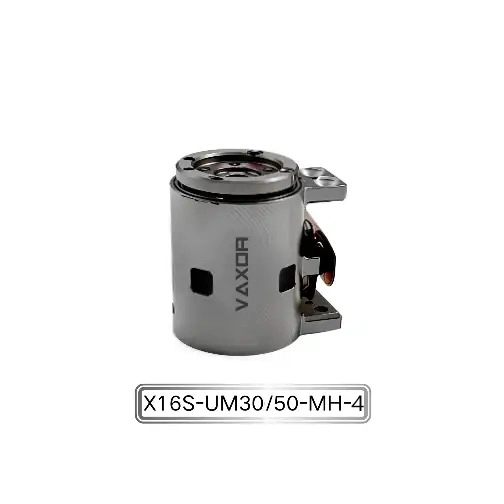
The Φ16mm Micro Joint Actuator developed by VAXOR applies high-density HDI PCB winding technology alongside a high-precision absolute magnetic encoder. Designed for compact robotic mechanisms, this joint module combines a small physical footprint with integrated motion and feedback components, making it suitable for applications such as dexterous robotic hands and highly integrated robotic systems.
Understanding HDI PCB Winding Technology
Traditional motor winding generally relies on copper wire arranged around designated stator structures. The winding process must account for conductor placement, insulation, connection points, and the available space inside the motor. As motor dimensions decrease, these manufacturing and assembly requirements become increasingly difficult to manage.
HDI PCB winding takes a different approach by incorporating conductive circuit patterns into printed circuit board structures. Instead of relying entirely on conventionally arranged winding wires, the design uses engineered copper traces and interconnected circuit layers to form the required electrical paths.
This approach offers several potential advantages for miniature motor development:
Structured conductor arrangement: PCB manufacturing provides a controlled method for positioning conductive paths and defining circuit geometry.
Efficient use of internal space: Multilayer circuit structures can help organize electrical connections within a restricted motor footprint.
Integration flexibility: Electrical routing can be considered alongside the mechanical and electromagnetic layout during the design stage.
Manufacturing repeatability: Established PCB fabrication processes support consistent conductor patterns and dimensional control.
These characteristics make HDI PCB winding worth considering when developing motors for compact integrated mechanisms. However, actual motor performance still depends on conductor resistance, electromagnetic design, thermal conditions, material selection, and manufacturing quality. PCB winding technology alone does not guarantee higher torque or efficiency; its value comes from how effectively it is incorporated into the complete motor architecture.
Why Winding Architecture Matters in Φ16mm Joint Actuators
A joint actuator is more than an individual motor. It is an integrated motion unit that must accommodate multiple functional components within a defined mechanical envelope.
In a conventional motor-driven assembly, the motor, reduction mechanism, encoder, and associated electrical connections may require separate installation and alignment operations. When the available diameter is limited to 16 mm, even small differences in component arrangement can affect the feasibility of the overall design.
Winding architecture therefore becomes an important part of the integration process.
HDI PCB winding allows electrical conductor arrangements to be developed with the motor's internal structure in mind. This can help engineers coordinate the placement of winding components, electrical interfaces, and supporting structures while managing the limited space available.
For miniature robotic joints, the benefits are particularly relevant in three areas.
Internal component organization: A structured winding layout can support more deliberate use of the motor's internal volume, leaving designers with greater flexibility when arranging adjacent components.
Electrical connection planning: PCB-based conductor patterns provide defined electrical routing paths. This can simplify certain aspects of internal connection design and reduce the need for separately arranged wiring structures.
Repeatable manufacturing: The use of controlled PCB fabrication processes can support consistency between winding structures, which is important when a miniature actuator moves from prototype development toward volume production.
The Φ16mm Micro Joint Actuator combines this winding approach with a compact joint architecture. Its development reflects the need to consider electromagnetic design, mechanical packaging, and feedback integration as parts of the same engineering task rather than as independent components.
Integrating Encoder Feedback into a Compact Motor Structure
Motor winding is only one part of a miniature joint actuator. Position feedback is equally important because robotic joints must translate motor rotation into controlled mechanical movement.
An absolute magnetic encoder provides position information that can be used by the motion controller to monitor the joint's angular position. Unlike a design that relies solely on motor rotation commands, an encoder-equipped actuator provides feedback that supports closed-loop position control.
The Φ16mm module uses an absolute magnetic encoder and supports SPI communication. This configuration gives system developers a defined interface for connecting position feedback to an external controller.
The product achieves angular accuracy of up to 0.02°, making it suitable for robotic mechanisms where small angular movements need to be controlled with high precision. When integrating the Φ16mm Micro Joint Actuator into a robotic system, engineers should consider several related design factors:
Encoder data acquisition and communication timing.
Controller compatibility with the SPI interface.
Position feedback processing and calibration.
Electrical routing between the actuator and main control board.
Mechanical alignment between the output shaft and connected structure.
The encoder and winding architecture serve different functions, but their integration within one compact module helps reduce the need to design and assemble these elements as entirely separate subsystems.
How Compact Winding Supports Robotic Joint Integration
Space limitations are common in dexterous robotic hands, compact robotic arms, and multi-joint mechanisms. Each joint must fit within the available structural envelope while leaving room for adjacent joints, wiring, and mechanical connections.
A Φ16mm joint module offers a smaller installation profile than larger conventional actuator assemblies. However, achieving compact dimensions requires more than reducing the motor diameter. The internal arrangement of the motor, transmission, encoder, and electrical connections must be considered together.
The Φ16mm Micro Joint Actuator is designed around this integrated approach. Its main specifications include:
Parameter | Specification |
|---|---|
Model | X16S/L-UM30/50-MH-4 |
Voltage | 12 V / 24 V |
Gear Ratio | 30 / 50 |
Continuous Torque | Up to 200 mNm |
Initial Torque | Up to 400 mNm |
Encoder | Absolute Magnetic Encoder |
Communication | SPI |
Weight | 24.3–26.1 g |
Angular Accuracy | Up to 0.02° |
These specifications provide engineers with a starting point for evaluating the module within a robotic joint design.
For example, when designing a multi-joint robotic hand, developers must consider the installation dimensions of each joint, the required movement range, the mechanical load on individual fingers, and the routing of power and communication connections. A compact integrated actuator can simplify the overall packaging process by combining several drive-related functions within one module.
The available 30:1 and 50:1 gear ratio configurations also give designers different transmission options. The appropriate configuration depends on the required output speed, torque, mechanical load, and movement characteristics of the application.
Manufacturing Consistency and the Transition to Mass Production
A winding structure that performs well in a prototype must also be manufacturable with consistent results. This becomes particularly important for miniature actuators because small variations in conductor geometry, component alignment, and assembly tolerances can influence the finished product.
HDI PCB winding uses established circuit fabrication processes to produce defined conductive patterns. For manufacturers, this creates an opportunity to manage conductor layouts through controlled production procedures rather than depending entirely on manual wire placement.
However, the transition from prototype to mass production still requires attention to several manufacturing factors:
PCB fabrication quality: Copper thickness, trace geometry, layer alignment, and insulation quality need to meet the requirements of the motor design.
Electrical consistency: Resistance variations and connection quality should be controlled to maintain predictable electrical characteristics between production batches.
Assembly accuracy: Winding structures must be correctly positioned in relation to the motor's magnetic and mechanical components.
Inspection procedures: Electrical testing, dimensional inspection, and functional verification help identify production deviations before final delivery.
These considerations are relevant to manufacturers developing compact actuators for robotics and other precision equipment. A design must not only meet its intended performance targets but also support repeatable assembly and quality control.
Engineering Considerations When Selecting a Φ16mm Joint Actuator
Although HDI PCB winding offers integration possibilities, engineers should evaluate the complete actuator according to the actual requirements of their equipment.
First, the required output torque should be calculated based on the mechanical load, transmission structure, acceleration requirements, and operating cycle. The module provides continuous torque of up to 200 mNm and initial torque of up to 400 mNm. These are different operating conditions, so the initial torque should not be treated as a continuous output rating.
Second, the supply voltage must match the selected actuator configuration and the system's electrical architecture. The 12V and 24V options provide flexibility, but the corresponding driver and power supply requirements should be confirmed before integration.
Third, the encoder interface must be compatible with the control system. SPI communication requires appropriate controller support, signal routing, and data processing. Engineers should verify communication timing and feedback requirements during system development.
Finally, the actuator's weight and mounting dimensions should be considered as part of the complete mechanical assembly. At 24.3–26.1 g, the module provides a reference point for estimating the moving mass of robotic mechanisms, particularly where several actuators are installed in a single structure.
These checks help determine whether the selected configuration can meet the equipment's mechanical, electrical, and control requirements.
VAXOR's Approach to Integrated Micro-Drive Development
Founded in 2024 and headquartered in Suzhou, China, VAXOR develops micro joint actuators and ultra-micro coreless motors for robotics, medical devices, precision instruments, and intelligent equipment.
The company's engineering team combines expertise in motor design, precision manufacturing, structural engineering, robotics control, and intelligent manufacturing. This multidisciplinary background supports product development from initial prototype validation through pilot production and batch delivery.
VAXOR's technology roadmap focuses on three requirements of modern micro-drive systems: compact dimensions, high performance, and scalable manufacturing. Its development work incorporates axial-flux motor technology, PCB/FPCB winding, optimized electromagnetic design, and miniature reduction mechanisms.
For integrated joint actuators, these technologies are considered alongside the requirements of the complete motion system. Motor architecture, transmission design, encoder integration, and manufacturing consistency all contribute to the final actuator configuration.
The Φ16mm Micro Joint Actuator represents this development direction. Its HDI PCB winding technology, absolute magnetic encoder, SPI communication, and compact mechanical structure address several integration requirements encountered in modern robotic systems.
The product is also notable for its mass-production positioning in the Φ16mm joint actuator category, where achieving consistent manufacturing quality within such a small form factor presents additional engineering challenges.
Conclusion
HDI PCB winding provides a structured approach to motor conductor design and electrical integration in compact drive systems. For miniature joint actuators, its value lies in how effectively it supports internal component arrangement, electrical routing, and repeatable manufacturing.
When combined with an appropriate transmission mechanism and position feedback system, this winding architecture can contribute to a more integrated actuator design.
With angular accuracy of up to 0.02°, continuous torque of up to 200 mNm, and a weight of 24.3–26.1 g, the Φ16mm Micro Joint Actuator offers a compact motion solution for dexterous robotic hands and highly integrated robotic systems.
Through continued development of micro-drive technology, VAXOR aims to provide practical actuator solutions that help equipment manufacturers address the growing demand for smaller, more integrated, and precisely controlled robotic mechanisms.