 Store

 EN
 CN
 VI
 IT
 ES
 TH
 JA
 PT
 MS
 KO
 FR
 DE
 ID
As miniature devices become more capable, motor selection increasingly depends on how much mechanical output a drive can deliver without adding unnecessary weight or taking up valuable installation space. In robotics, precision instruments, medical devices, and intelligent equipment, even a small increase in motor mass can affect the overall structure, energy consumption, and movement characteristics of the finished product.
Torque-to-weight ratio is therefore an important consideration when evaluating miniature drive solutions. A motor must provide sufficient torque for its intended load while maintaining a compact and lightweight structure. For engineers developing space-constrained mechanisms, the relationship between motor torque, operating speed, and weight can help determine whether a particular motor is suitable for the application.
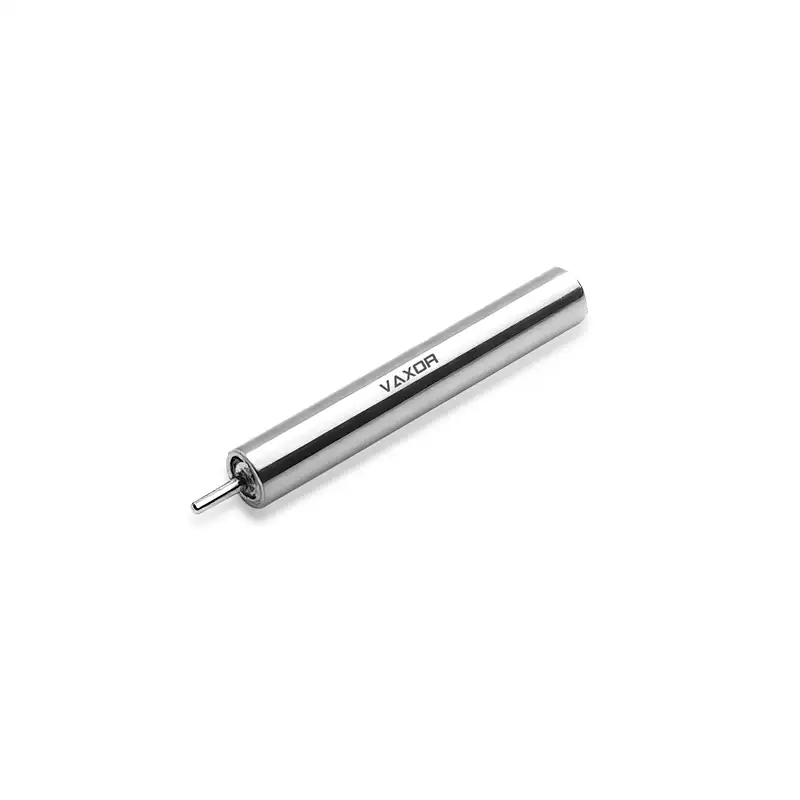
The φ6mm Ultra-micro Brushless Coreless Motor developed by VAXOR addresses these requirements with a compact 6 mm form factor, a weight of 3.75 g, and a nominal torque of 0.49 mNm. Its specifications provide a practical starting point for evaluating the balance between mechanical output and motor mass in miniature drive systems.
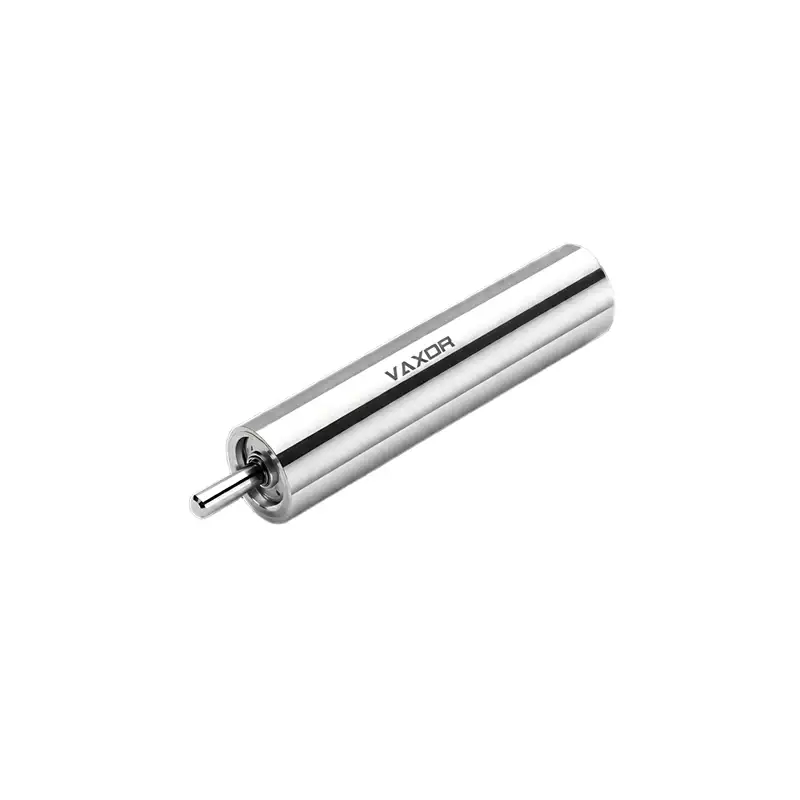
Understanding Torque-to-Weight Ratio in Miniature Motors
Torque-to-weight ratio describes the amount of torque a motor can produce relative to its own weight. It is commonly used as a reference when comparing motors intended for applications where installation space and overall mass are restricted.
The basic calculation is:
\[ \text{Torque-to-Weight Ratio}=\frac{\text{Motor Torque}}{\text{Motor Weight}} \]For miniature motors, this measurement helps engineers understand how efficiently the motor's physical mass is being used to provide rotational output.
However, torque-to-weight ratio should not be considered independently of operating conditions. A motor's rated torque, maximum or stall torque, speed, current consumption, and thermal characteristics all influence its practical performance. A motor with a higher theoretical ratio may not necessarily be the better choice if its operating characteristics do not match the actual load.
For this reason, engineers should evaluate torque-to-weight ratio using a clearly defined operating point, preferably the rated operating condition rather than a temporary maximum or stall condition.
Evaluating the Torque-to-Weight Performance of a Φ6mm Motor
The physical dimensions of a miniature motor create design limitations. Reducing the motor diameter generally restricts the available space for electromagnetic components, winding structures, and mechanical support. Maintaining useful torque output within this limited volume requires careful motor design.
The VAXOR G06P-VW00-QZ-1 provides the following technical specifications:
Parameter | Specification |
|---|---|
Model | G06P-VW00-QZ-1 |
Motor Diameter | Φ6 mm |
Operating Voltage | 12 V |
No-Load Speed | 63,000 rpm |
Nominal Speed | 45,000 rpm |
Nominal Torque | 0.49 mNm |
Stalling Torque | 0.98 mNm |
Torque Constant | 1.05 mNm/A |
Weight | 3.75 g |
Using the nominal torque and motor weight, its nominal torque-to-weight ratio can be calculated as follows:
\[ \frac{0.49\text{ mNm}}{3.75\text{ g}} \approx 0.131\text{ mNm/g} \]This value provides a reference for assessing the motor's rated torque relative to its own mass.
The stalling torque of 0.98 mNm corresponds to a theoretical ratio of approximately 0.261 mNm/g. However, this figure should not be interpreted as a continuous operating capability. Stall conditions involve zero rotational speed and can produce substantial current and heat. The nominal torque value is therefore more appropriate for evaluating the motor's specified operating performance.
For equipment developers, these figures offer a more practical basis for comparing miniature motors than physical dimensions alone.
Why Motor Weight Matters in Compact Drive Systems
In conventional industrial equipment, a few grams of additional motor weight may have little influence on the overall design. In miniature mechanisms, the same weight difference can become a meaningful engineering consideration.
This is particularly relevant in applications involving moving components, handheld devices, compact robotic mechanisms, and precision instruments.
1. Reduced load on moving structures
When a motor is installed on a moving assembly, its weight becomes part of the total moving mass. A heavier motor can increase the force required for acceleration and deceleration. In robotic mechanisms and compact positioning systems, reducing motor mass can help simplify the mechanical design and reduce the load imposed on supporting structures.
2. More flexible equipment integration
A lightweight motor provides greater flexibility when arranging internal components. Engineers can allocate more of the available space and weight allowance to gear mechanisms, sensors, control boards, and structural components.
3. Considerations for energy consumption
In battery-powered equipment, the total mass of moving components can influence the energy required for movement. A lighter drive assembly may help reduce mechanical load during repeated acceleration and deceleration. Actual energy savings, however, depend on the complete system design, including motor efficiency, transmission losses, control strategy, and operating cycle.
4. Improved design flexibility
A compact motor can be integrated into smaller mechanical assemblies where conventional motors may not fit. This allows product developers to explore different structural layouts without significantly increasing the overall dimensions of the equipment.
Balancing Torque Output and Operating Speed
Torque-to-weight ratio is only one part of motor evaluation. For high-speed miniature drives, engineers must also understand how torque and rotational speed relate to the intended mechanical load.
The G06P-VW00-QZ-1 operates at a nominal speed of 45,000 rpm, with a no-load speed of 63,000 rpm. These two values describe different operating conditions.
No-load speed represents the rotational speed when the motor is running without an external mechanical load. Once a load is connected, the motor operates at a different speed depending on the load characteristics and operating conditions.
Nominal speed provides a more relevant reference for evaluating the motor under its specified operating condition. Its nominal torque of 0.49 mNm should be considered together with this speed when estimating the requirements of a miniature drive mechanism.
For example, a compact robotic transmission may require a relatively high input speed to achieve the desired output movement after reduction. In this situation, the motor's high rotational speed can provide flexibility when selecting a suitable transmission arrangement.
Engineers should consider the following factors during motor and load matching:
Required output speed after transmission.
Torque demand during normal operation.
Starting torque required to overcome initial mechanical resistance.
Gearbox efficiency and mechanical friction.
Operating duration and duty cycle.
Current and thermal limitations of the motor.
A motor should be selected according to the complete operating requirements rather than its maximum speed or torque specification alone.
The Role of Torque Constant in Motor Selection
Torque constant is another important parameter when evaluating a miniature motor's electrical and mechanical characteristics.
The G06P-VW00-QZ-1 has a torque constant of 1.05 mNm/A. Under the applicable operating conditions, this parameter describes the relationship between motor current and electromagnetic torque.
The theoretical relationship can be expressed as:
\[ T=K_t \times I \]Where:
\(T\) represents electromagnetic torque.
\(K_t\) represents the torque constant.
\(I\) represents motor current.
A torque constant of 1.05 mNm/A gives engineers a reference for estimating the current associated with a required torque.
For example, when developing a motor control system, engineers can use the torque constant as one input when evaluating current requirements under different load conditions. This helps establish a starting point for selecting the motor driver and designing current control parameters.
Nevertheless, the calculation is an idealized relationship. Actual current requirements may also be affected by winding resistance, motor losses, controller characteristics, and operating temperature.
For compact equipment, understanding this relationship is particularly useful because the motor driver, power supply, and wiring must all fit within limited installation space.
Application Considerations for Lightweight Precision Mechanisms
The combination of a 6 mm diameter, 3.75 g weight, and high rotational speed makes this motor relevant to the development of compact drive assemblies.
Potential application areas include:
Miniature robotic mechanisms
Small robotic components often require compact drive sources that can operate within restricted mechanical spaces. Motor weight and torque output influence the design of moving structures, transmission components, and overall actuator dimensions.
Precision instruments
Portable and compact precision instruments may use miniature motors to drive internal rotating or positioning mechanisms. In these applications, motor selection must account for available installation space, operating speed, mechanical load, and control requirements.
Medical device mechanisms
Certain medical devices incorporate small motor-driven components where compact dimensions and lightweight construction are important. Motor selection must be based on the specific device requirements, including operating conditions, reliability expectations, and applicable regulatory validation.
Intelligent equipment and compact automation
Automated mechanisms with limited installation space may benefit from miniature motors that provide high rotational speed without introducing excessive mass. The motor can serve as the drive source for appropriately designed transmission and mechanical assemblies.
In each application, the actual suitability of a motor depends on the complete drive system rather than the motor specifications alone.
VAXOR's Engineering Approach to Micro Drive Technology
Selecting a miniature motor is only one stage in developing a reliable drive system. Mechanical integration, electromagnetic design, precision manufacturing, and control compatibility also influence the final performance of the equipment.
Founded in 2024 and headquartered in Suzhou, China, VAXOR focuses on developing micro joint actuators and ultra-micro coreless motors for robotics, medical devices, precision instruments, and intelligent equipment.
Its technical roadmap addresses three core requirements of miniature drive systems: compact dimensions, high performance, and scalable production.
The company's engineering team brings together expertise in motor design, precision manufacturing, structural engineering, and robotics control. This multidisciplinary approach supports development activities from prototype validation and pilot production to batch delivery.
VAXOR also works with axial-flux motor technology, PCB/FPCB winding, optimized electromagnetic design, and miniature reduction mechanisms. These technologies support the development of compact motion solutions designed around high torque density, fast response, and consistent manufacturing requirements.
For miniature motor projects, this engineering approach is relevant because motor performance must be considered alongside the mechanical and electrical interfaces of the final equipment. A motor that meets the basic torque and speed requirements must also be compatible with the available installation space, transmission structure, power supply, and control architecture.
The φ6mm Ultra-micro Brushless Coreless Motor represents this product direction, offering a defined combination of size, weight, nominal torque, and operating speed for engineers evaluating compact drive configurations.
Making Motor Selection More Practical
Torque-to-weight ratio provides a useful starting point when comparing miniature motors, but it should be treated as one part of a broader engineering evaluation.
For the G06P-VW00-QZ-1, the nominal torque of 0.49 mNm and weight of 3.75 g produce a nominal torque-to-weight ratio of approximately 0.131 mNm/g. Combined with its 45,000 rpm nominal speed and 12 V operating voltage, these specifications provide a practical reference for preliminary drive system design.
Before final selection, engineers should also verify the required load torque, transmission efficiency, operating duration, current consumption, thermal limits, and mechanical integration conditions.
By evaluating these factors together, equipment developers can make more informed decisions when selecting a miniature motor for space-constrained applications. With its focus on ultra-micro motors and integrated motion technology, VAXOR supports the development of compact drive solutions for the evolving requirements of robotics, precision instruments, medical devices, and intelligent equipment.