 Store
Store
 EN
EN CN
CN VI
VI IT
IT ES
ES TH
TH JA
JA PT
PT MS
MS KO
KO FR
FR DE
DE ID
IDFor a dexterous robot, a small movement at the joint can make a noticeable difference in the position of the end effector. This becomes even more important when a robotic hand needs to manipulate small objects, coordinate several fingers, or perform controlled movements in a limited space. In these applications, joint size alone is not enough. The actuator also needs accurate position feedback, stable transmission, and a compact mechanical and electronic structure.
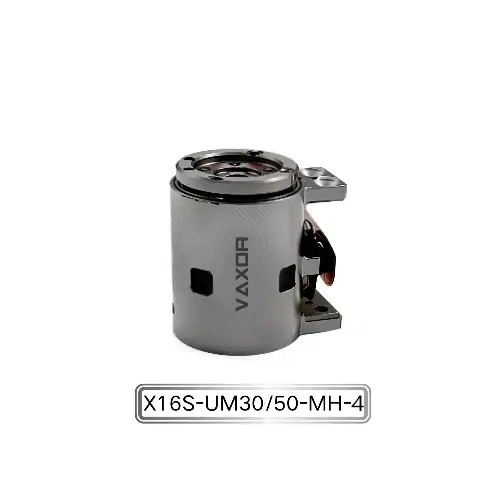
The Φ16mm Micro Joint Actuator is designed for this type of high-integration motion system. With a diameter of only 16 mm, the joint module combines a miniature drive structure, high-density HDI PCB winding technology, and a high-precision absolute magnetic encoder. Its angular accuracy can reach up to 0.02°, making the actuator suitable for dexterous hands and other compact robotic systems where precise joint movement is required.
What Determines Angular Accuracy in a Micro Joint?
Angular accuracy does not come from the encoder alone. The actual movement of a robotic joint depends on several parts working together, including the motor, reduction mechanism, position feedback system, PCB or winding structure, mechanical assembly, and control algorithm.
When the actuator is very small, these relationships become more demanding. There is less internal space for the motor and transmission components, while the system still needs to generate useful torque and provide reliable position information.
A high-precision encoder can provide the control system with detailed information about the joint position. At the same time, the mechanical transmission needs to convert motor movement into controlled output movement with sufficient consistency.
For a 16 mm class joint module, achieving a specified angular accuracy therefore requires the electronic, mechanical, and control elements to be considered as an integrated system.
The Role of the Absolute Magnetic Encoder
The Φ16mm Micro Joint Actuator uses an absolute magnetic encoder for position feedback.
Unlike a system that only relies on motor rotation without direct position information, an encoder allows the controller to monitor the angular position of the joint. The “absolute” characteristic is particularly relevant when the system needs to know the actual position of the joint rather than simply counting incremental movement.
For dexterous hands, this information can be important because multiple joints often operate together. A small position error at one joint can affect the final position of a finger or end effector.
The encoder also needs to fit within the highly constrained internal space of the actuator. This is one reason why miniature actuator design is not simply a matter of reducing the dimensions of a conventional motor.
How HDI PCB Winding Supports Miniaturization
One of the distinctive technologies used in the actuator is high-density HDI PCB winding technology.
Traditional motor structures can require considerable internal space for winding and electrical connections. PCB-based winding approaches provide another way to organize the electromagnetic components within a compact structure.
For a Φ16 mm joint module, internal space is a critical engineering constraint. The motor, reduction mechanism, encoder, PCB structure, housing, and electrical connections all need to fit within a very small volume.
HDI technology can support high-density circuit integration and help make better use of the available internal space. When combined with optimized electromagnetic design and miniature mechanical components, this approach can contribute to a compact actuator architecture.
The objective is not simply to make the actuator smaller. The more important requirement is to maintain useful torque, feedback accuracy, response, and reliability while reducing the overall joint size.
Gear Ratio and Controlled Joint Movement
The X16S/L-UM30/50-MH-4 model is available with 30:1 and 50:1 gear ratio options.
The gear ratio influences the relationship between motor speed and output movement. A higher reduction ratio can provide greater output torque and more controlled output motion, while the appropriate choice depends on the requirements of the robot joint.
For example, a dexterous hand may have different requirements for finger joints, wrist mechanisms, or other compact articulated structures. The actuator should therefore be selected according to the required combination of output torque, movement speed, control response, and available installation space.
Offering two gear ratio options gives robot designers more flexibility when matching the actuator to the mechanical characteristics of a specific joint.
200 mNm Continuous Torque in a 16 mm Class Module
Size reduction should not come at the expense of useful output capability.
The actuator provides continuous torque of up to 200 mNm and initial torque of up to 400 mNm. These figures give engineers a starting point for evaluating whether the module is suitable for a particular joint load and motion profile.
Continuous torque is particularly relevant when a joint needs to maintain force or operate repeatedly over an extended period. Initial torque, meanwhile, can be important when the actuator needs to generate higher torque during specific movement conditions.
Actual application performance will depend on factors such as duty cycle, operating voltage, reduction ratio, mechanical load, control strategy, and thermal conditions. Engineers should therefore evaluate the actuator based on the complete operating profile rather than using a single torque value in isolation.
Why Low Weight Matters in Dexterous Robots
The actuator weighs approximately 24.3–26.1 g.
This relatively low mass can be significant when multiple actuators are integrated into the same robotic mechanism. A dexterous hand may contain several independently controlled joints, meaning the weight of individual actuators can accumulate across the complete system.
Reducing joint mass can also affect the mechanical design of the robot. Lower actuator weight may help reduce the load carried by upstream joints and simplify the design of supporting structures.
This is especially relevant for compact robotic hands and highly integrated robotic systems where the available space and total mass are both restricted.
The combination of small diameter and low weight is therefore an important part of the value proposition of the Φ16mm Micro Joint Actuator, rather than a specification that should be considered separately from its torque and control performance.
12V or 24V: Selecting the Appropriate Configuration
The actuator supports 12V and 24V configurations.
The appropriate voltage should be determined by the robot's existing power architecture and motor driver. Designers should also consider wiring, power distribution, controller compatibility, and the operating conditions of the complete robotic system.
For a multi-joint robot, the power requirements of several actuators need to be considered together. The selected voltage configuration should therefore be compatible with the system-level electrical design rather than selected only according to the individual actuator.
This type of early-stage compatibility check can help avoid redesigning the power and control system after the mechanical structure has already been completed.
SPI Communication for Compact Motion Control
The actuator uses SPI communication.
For highly integrated robotic systems, the communication interface is an important part of actuator selection because the joint module needs to work with the robot's controller and feedback architecture.
SPI provides a direct digital communication approach that can be integrated into compact electronic control systems. In a multi-joint application, engineers need to consider how the communication architecture will connect individual actuators, controllers, sensors, and other electronic components.
The exact communication implementation depends on the system architecture, but confirming SPI compatibility at the beginning of the design process can help ensure that the actuator fits the intended control platform.
Where a 16 mm Joint Module Can Be Used
A compact actuator is particularly useful when conventional motor-and-reducer assemblies occupy too much space.
Potential applications include dexterous robotic hands, compact robotic joints, highly integrated robotic mechanisms, precision instruments, intelligent equipment, and other systems where actuator volume is restricted.
In a dexterous hand, multiple small joints can be arranged within the fingers and palm. In other robotic mechanisms, a compact actuator can help engineers place more motion axes into a limited mechanical envelope.
The application should still be evaluated according to required torque, joint speed, accuracy, duty cycle, voltage, communication interface, and mechanical mounting conditions.
VAXOR's Approach to Micro Drive Technology
VAXOR was founded in 2024 and is headquartered in Suzhou, China. The company develops micro joint actuators and ultra-micro coreless motors for robotics, medical devices, precision instruments, and intelligent equipment.
Its technical approach combines axial-flux motor technology, PCB/FPCB winding, optimized electromagnetic design, miniature reduction mechanisms, and precision manufacturing. The goal is to address the core requirements of compact drive systems: small size, high performance, fast response, and scalable production.
The company's multidisciplinary R&D team covers motor design, precision manufacturing, structural design, robotics control, and intelligent manufacturing. Its engineering capabilities extend from prototype validation and pilot production to batch delivery, which is important for customers moving a micro-drive design from research and development toward practical deployment.
What Engineers Should Check Before Selecting a Micro Joint Actuator
Before integrating a miniature actuator into a robotic joint, engineers should evaluate more than the outside diameter.
Key considerations include:
Required angular accuracy and position feedback method
Continuous and peak torque requirements
Required gear ratio
Joint operating speed
Available installation space
Total actuator weight
Power supply voltage
Communication interface
Duty cycle and thermal conditions
Mechanical mounting and integration requirements
These factors should be evaluated together because changing one parameter can affect the requirements for the others.
For example, increasing the number of joints may make weight and overall volume more important. A high-precision robotic hand may place greater emphasis on encoder feedback and angular accuracy, while another mechanism may prioritize torque density or response speed.
Building More Compact Robotic Motion Systems
The development of highly integrated robots is pushing actuator design toward smaller dimensions without abandoning output and control performance. A 16 mm joint module needs to combine motor technology, transmission, position sensing, electronics, and mechanical packaging within a very limited space.
With its 0.02° angular accuracy, absolute magnetic encoder, HDI PCB winding technology, 30:1 or 50:1 gear ratio, up to 200 mNm continuous torque, and 24.3–26.1 g weight, the Φ16mm Micro Joint Actuator is positioned for applications where compact size and precise joint control need to be considered together.
For robot developers working on dexterous hands and highly integrated robotic mechanisms, evaluating these specifications at the system-design stage can help determine whether a miniature joint module is suitable for the required motion architecture.