 Store

 EN
 CN
 VI
 IT
 ES
 TH
 JA
 PT
 MS
 KO
 FR
 DE
 ID
As robotic systems become smaller and more integrated, actuator design faces a difficult engineering challenge: delivering sufficient output torque without increasing the space required by each joint. This is particularly important in dexterous robotic hands, compact robotic arms, medical devices, and other equipment where installation space and overall weight directly affect system design.
Traditional motor configurations can provide reliable motion performance, but their structural layout may limit how much output capability can be integrated into a restricted volume. Axial flux motor technology offers another approach. By arranging the magnetic flux along the motor's axial direction, this architecture creates opportunities to improve torque density and make more effective use of the available space.
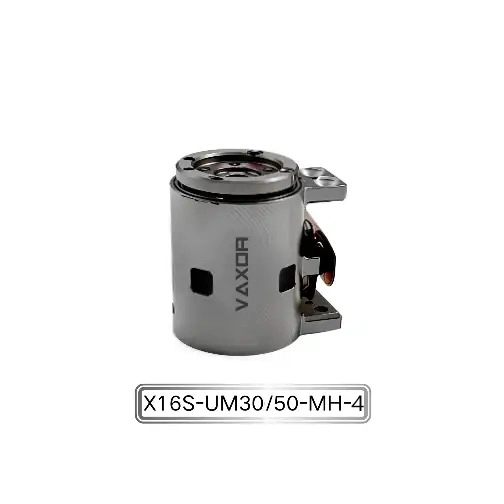
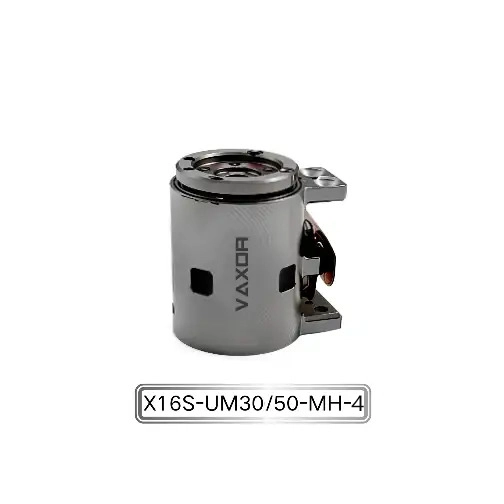
For compact joint modules, the value of this approach is not simply a smaller motor. It is the ability to combine motor performance, transmission design, feedback components, and mechanical integration within a limited dimensional envelope. VAXOR applies this design direction to its Φ20mm Micro Joint Actuator, a compact motion solution developed for applications that require substantial joint output from a small mechanical package.

Understanding the Axial Flux Motor Architecture
The main distinction between axial flux and conventional radial flux motor designs lies in the direction of magnetic flux and the arrangement of the active motor components.
In a radial flux motor, magnetic flux travels radially across the air gap between the rotor and stator. In an axial flux motor, the magnetic flux travels parallel to the motor shaft. This different electromagnetic arrangement allows the motor to use a disc-like structure, which can be advantageous when designing compact drive systems.
For applications with strict dimensional requirements, the axial flux configuration provides an alternative way to arrange electromagnetic components within the available space. Its potential benefits include a compact structural layout and high torque density. However, actual performance depends on several engineering factors, including magnetic circuit design, air-gap control, winding configuration, thermal management, and manufacturing accuracy.
The architecture therefore needs to be evaluated as part of the complete actuator rather than as an isolated motor component. A motor may have favorable electromagnetic characteristics, but the final joint module must also accommodate the reducer, encoder, bearings, housing, and electrical connections.
How Axial Flux Design Supports Higher Torque Density
Torque density describes how much torque a motor or actuator can deliver relative to its size or mass. It is an important consideration in compact robotics because increasing the dimensions of a joint can affect the entire mechanical structure.
An axial flux motor can support higher torque density through its electromagnetic layout and effective use of the available active area. The disc-shaped configuration provides design flexibility for arranging the rotor, stator, and magnetic components. When the electromagnetic structure is properly optimized, more torque output can be achieved within a restricted installation envelope.
The X20 adopts an innovative axial flux motor architecture that delivers over 30% higher torque density than conventional designs while maintaining an ultra-compact footprint. This improvement is particularly relevant to robotic systems in which actuator dimensions cannot increase freely.
Higher torque density can help engineers address several practical requirements:
Space utilization: More output capability can be integrated into a limited joint installation area.
Mechanical integration: A compact actuator can provide greater flexibility when arranging links, housings, and adjacent components.
System weight: A smaller drive package can support weight-conscious mechanical design, although the final system weight depends on the complete assembly.
Joint performance: Greater torque capability within a compact structure can help meet demanding motion requirements without relying solely on a larger actuator.
These benefits do not eliminate the need for proper load calculations. Engineers still need to consider joint position, lever arm, acceleration, duty cycle, and external forces when selecting an actuator.
Integrating the Motor and Reduction Mechanism
A compact robotic actuator is more than a motor. The reduction mechanism plays an equally important role in converting motor rotation into usable joint output.
Motor speed and torque characteristics must be matched with the requirements of the driven mechanism. A miniature reducer can increase output torque while reducing rotational speed, but its configuration also influences the actuator's overall dimensions, mechanical response, and integration requirements.
VAXOR develops micro-drive solutions by combining axial flux motor technology with miniature cycloidal reducers. This approach brings the motor and reduction mechanism together within a compact motion module, helping engineers simplify the design of space-constrained robotic joints.
The X20 is available with gear ratios of 15, 30, and 50. These configurations provide different transmission options for applications with varying speed and output requirements. Rather than choosing a ratio based only on the highest available torque, designers should evaluate the actual movement profile of the joint.
For example, a joint responsible for relatively fast repositioning may have different requirements from one that performs slower movements under sustained mechanical loads. The selected ratio should reflect the required output speed, torque, operating cycle, and control strategy.
The X20 provides continuous torque of up to 450 mNm and initial torque of up to 800 mNm. These ratings describe different operating conditions and should be considered separately during system design. Initial torque should not be treated as a continuous operating rating. Engineers should verify the applicable operating limits and duty-cycle requirements before integrating the actuator into a final product.
Packaging Performance Within a Φ20mm × 20mm Envelope
Dimensional constraints become especially important when multiple actuators must be installed within a robotic mechanism. Increasing the size of one joint can affect neighboring joints, link geometry, cable routing, and the overall mechanical layout.
The X20 measures only Φ20mm × 20mm, placing it among the world's most compact joint modules according to its product specifications. Its small form factor provides an option for developers who need to integrate motion capabilities into restricted spaces.
The Φ20mm Micro Joint Actuator is available in the X20S/L-UM15/30/50-MH-4 model series, with 12V, 24V, and 48V voltage options. Its weight ranges from 37.2g to 41.6g, depending on the configuration.
These specifications are relevant when evaluating the actuator as part of a larger robotic assembly. For example, developers designing multi-joint mechanisms need to account for the combined weight of all actuators, structural links, wiring, and end-effectors. The installation envelope also needs to leave sufficient room for mechanical connections and electrical routing.
A compact module can make integration easier, but it does not automatically solve every packaging problem. Mounting interfaces, structural support, heat dissipation, and maintenance access should all be considered during the mechanical design stage.
Feedback and Communication for Controlled Joint Motion
Compact actuators also need reliable feedback and communication interfaces. In robotic applications, the controller must receive position information and coordinate motor operation with the wider motion system.
The X20 incorporates an absolute magnetic encoder and supports SPI communication. An absolute encoder provides position information based on its absolute measurement reference, while SPI offers a serial communication interface for exchanging data with compatible control electronics.
For system developers, these features need to be considered alongside the selected controller, electrical interface, communication timing, and software architecture. The encoder's role is not limited to supplying position data. Its feedback must be correctly interpreted and incorporated into the motion-control loop.
SPI integration requires attention to signal connections, timing requirements, data handling, and compatibility between the actuator and controller. These details become particularly important in compact robotic assemblies where several electronic components may share limited space.
The Φ20mm Micro Joint Actuator combines its motor and reduction architecture with encoder feedback and SPI communication, providing a compact foundation for developers building integrated robotic motion systems.
Engineering Considerations Before Selecting an Actuator
Selecting a micro joint actuator should begin with the mechanical and electrical requirements of the target application. A small external dimension is useful, but it is only one part of the selection process.
Engineers should first calculate the torque required at the joint. This involves considering the supported load, distance from the joint axis, acceleration, gravity effects, and any external forces. The required output should then be compared with the actuator's continuous torque rating and the expected operating cycle.
The next step is to evaluate the transmission ratio. Different ratios influence output speed and torque, so the selection should reflect the movement profile rather than relying on a single maximum rating.
Voltage compatibility is another important consideration. The X20 supports 12V, 24V, and 48V configurations. The appropriate version depends on the available power architecture, driver compatibility, current requirements, and electrical design of the complete robotic system.
Finally, developers should review installation dimensions, actuator weight, feedback requirements, communication compatibility, and thermal conditions. Prototype testing under representative loads can help identify integration issues before moving into pilot production.
VAXOR's Approach to Micro-Drive Engineering
Founded in 2024 and headquartered in Suzhou, China, VAXOR develops micro joint actuators and ultra-micro coreless motors for robotics, medical devices, precision instruments, and intelligent equipment.
Its technology roadmap focuses on three core requirements of micro-drive systems: compact size, high performance, and scalable production. The company's engineering approach integrates axial flux motors, PCB/FPCB winding, optimized electromagnetic design, and miniature reduction mechanisms to develop compact motion solutions.
Behind this work is a multidisciplinary team covering motor design, precision manufacturing, structural design, robotics control, and intelligent manufacturing. The team combines international technical backgrounds with practical engineering experience, supporting development from prototype validation and pilot production to batch delivery.
This engineering capability is important in micro-drive development because compact components often require close coordination between electromagnetic design, mechanical structures, manufacturing processes, and control systems. A design that performs well in a prototype must also be evaluated for production consistency and integration reliability.
VAXOR products have been supplied or sampled to robotics companies, technology enterprises, and research institutions worldwide. Its mission is to become a global benchmark in micro-drive technology, while its vision is to provide the core driving force that advances human productivity.
Supporting the Next Generation of Compact Robotic Systems
The development of compact robotics is increasing the demand for actuators that combine high output capability with efficient space utilization. Axial flux motor architecture provides one approach to addressing this requirement by offering a different electromagnetic layout for compact drive systems.
The X20 brings this architecture together with a miniature reduction mechanism, multiple voltage and gear-ratio configurations, an absolute magnetic encoder, and SPI communication. Its Φ20mm × 20mm dimensions and torque-density advantage make it a relevant option for developers evaluating compact joint solutions.
For engineers working on robotic arms, intelligent equipment, and other space-constrained mechanisms, choosing the right actuator requires more than comparing maximum torque values. Motor architecture, transmission configuration, feedback, power supply, weight, and application-specific operating conditions all contribute to the final system design.
With its focus on micro-drive technology and engineering implementation, VAXOR continues to develop compact motion solutions for increasingly integrated machines. The Φ20mm Micro Joint Actuator represents this direction, combining axial flux motor design and compact joint integration to support the evolving requirements of modern robotic systems.