 Store

 EN
 CN
 VI
 IT
 ES
 TH
 JA
 PT
 MS
 KO
 FR
 DE
 ID
In compact robotic systems, an actuator may need to hold a position, move against resistance, accelerate a joint, and respond to sudden changes in load within a very limited installation space. These operating conditions place different demands on the drive system. An actuator that can deliver sufficient force for a brief movement may not necessarily be suitable for maintaining the same load continuously.
This is why understanding the difference between continuous torque and initial torque is important when selecting a micro actuator. Both specifications describe the torque capability of a drive unit, but they relate to different operating conditions. Looking at only the highest torque figure can lead to an unsuitable selection, particularly in applications where an actuator must operate repeatedly or maintain a load for extended periods.
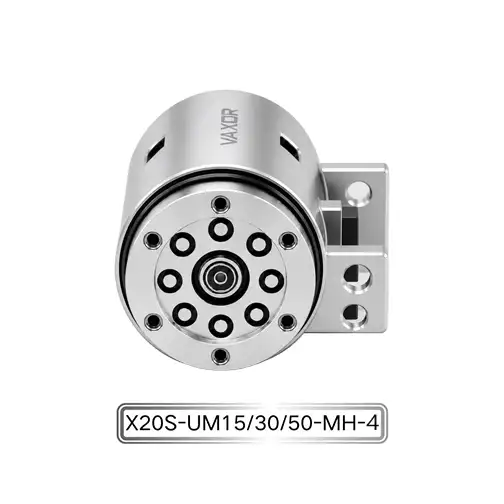
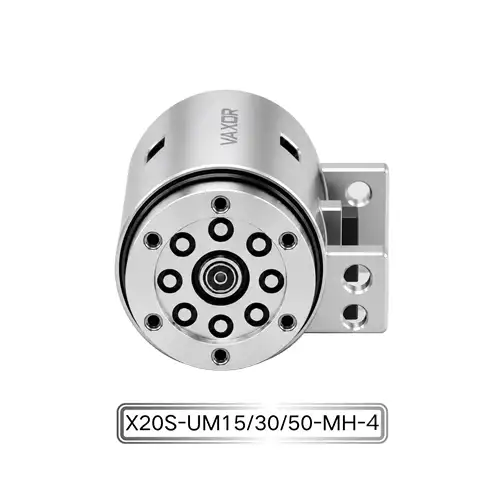
For designers working with compact robotic joints, the Φ20mm Micro Joint Actuator provides a useful example of how these two specifications should be considered together. Its X20 platform offers continuous torque of up to 450 mNm and initial torque of up to 800 mNm within a Φ20mm × 20mm form factor.
What Is Continuous Torque?
Continuous torque refers to the torque an actuator can deliver during sustained operation under specified conditions. It is particularly relevant when a motor must maintain a load or repeatedly perform movements without exceeding its allowable operating temperature or other mechanical and electrical limits.
In a robotic joint, continuous torque may be required when an arm holds an object, maintains a particular posture, or moves slowly while supporting a consistent external load. For example, a robotic gripper may need to maintain its grip throughout an assembly operation. The actuator must provide enough torque for the required task while remaining within its permitted operating range.
Continuous torque is influenced by several factors:
Thermal conditions: Motor winding temperature, heat transfer through the actuator housing, and the surrounding environment all affect sustained operation.
Power supply: Available voltage and current, together with the motor driver configuration, determine the electrical conditions under which torque can be produced.
Mechanical transmission: Gear reduction, friction, bearing conditions, and transmission efficiency influence the torque delivered at the output.
Operating cycle: The duration of movement, holding time, rest intervals, and frequency of repeated operation affect the actuator's thermal load.
A continuous torque rating should therefore be evaluated alongside the manufacturer's specified test conditions. The actual usable torque in a finished robot may differ depending on installation, cooling, control settings, and external loading.
What Does Initial Torque Mean?
Initial torque describes a torque value associated with the beginning of actuator operation or an initial operating condition, according to the manufacturer's specification and test method. It should not automatically be treated as a continuous operating capability.
When a robotic joint starts moving from rest, it may encounter static friction, an external load, or resistance from the connected mechanism. The actuator may need to generate additional torque to initiate movement. Similar demands can occur during direction changes, positioning adjustments, or other short-duration operating events.
However, the exact meaning of initial torque depends on how the manufacturer defines and measures it. It is important to distinguish this specification from peak torque, stall torque, and maximum intermittent torque. These terms are not interchangeable.
For engineering selection, the initial torque figure should be reviewed together with its test conditions, allowable duration, current limit, and operating duty cycle. If these details are not available, the value should be treated as a reference specification rather than an indication that the actuator can safely deliver that torque for any chosen period.
Continuous Torque and Initial Torque: The Key Differences
Although both specifications describe torque output, they answer different questions during actuator selection.
| Evaluation factor | Continuous Torque | Initial Torque |
|---|---|---|
| Main purpose | Sustained operating capability | Torque associated with an initial operating condition |
| Typical relevance | Holding loads and repeated operation | Starting movement or overcoming initial resistance |
| Thermal consideration | Particularly important over extended operation | Depends on the duration and conditions of the initial event |
| Selection focus | Long-term operating requirements | Short-duration torque demand and manufacturer-defined limits |
| Key verification | Continuous operating and temperature conditions | Measurement method, duration, current limit, and duty cycle |
The practical distinction is that continuous torque helps determine whether an actuator can support the normal operating workload, while initial torque helps assess whether it can meet the specified initial torque demand.
Neither value should be considered independently. A design that depends on a high initial torque value for frequent or extended operation may place excessive demands on the motor, driver, power supply, or mechanical transmission.
Understanding the Torque Specifications of the X20 Micro Joint Actuator
The X20 series from VAXOR is designed for robotic systems that require substantial torque output within a compact installation space. Measuring only Φ20mm × 20mm, the module combines a compact axial-flux motor architecture with a miniature reduction mechanism.
Its published specifications provide a practical starting point for evaluating continuous and initial torque requirements.
| Parameter | Specification |
|---|---|
| Model | X20S/L-UM15/30/50-MH-4 |
| Dimensions | Φ20mm × 20mm |
| Voltage | 12 / 24 / 48 V |
| Gear Ratio | 15 / 30 / 50 |
| Continuous Torque | Up to 450 mNm |
| Initial Torque | Up to 800 mNm |
| Encoder | Absolute Magnetic Encoder |
| Communication | SPI |
| Weight | 37.2–41.6 g |
The continuous torque rating of up to 450 mNm is relevant when evaluating the sustained mechanical demands of a robotic joint. Designers should compare this value with the torque required during normal operation, including the effects of gravity, friction, acceleration, and the connected load.
The initial torque rating of up to 800 mNm provides a separate reference for evaluating the actuator's initial torque capability. It should not be interpreted as a continuous rating or as a guaranteed peak torque available under every operating condition. The applicable duration, current requirements, and measurement conditions should be confirmed with the manufacturer before using this figure as a design limit.
The Φ20mm Micro Joint Actuator also offers 15:1, 30:1, and 50:1 gear ratio options. These configurations give system designers different transmission choices, but the resulting output characteristics should be evaluated for each specific configuration. A higher reduction ratio can change the relationship between motor speed and output torque, while also affecting motion response and mechanical behavior.
How to Match Torque Ratings to Real Operating Conditions
Selecting an actuator based only on the maximum torque figure is not a reliable engineering method. A better approach is to identify the loads and movement patterns that the joint will experience throughout its operating cycle.
1. Calculate the required holding torque
For joints that support an external load, begin by estimating the torque needed to maintain the required position. Consider the load mass, distance from the rotation axis, joint orientation, and any additional mechanical resistance.
For example, a robotic arm holding an object away from its shoulder joint experiences a gravitational moment that changes with arm position. The actuator must be selected according to the actual mechanical arrangement rather than the object's mass alone.
2. Evaluate the torque required during movement
Movement introduces additional torque requirements. Acceleration, deceleration, friction, and changes in load distribution can all affect the torque needed at the output shaft.
Designers should identify the most demanding movement in the operating sequence and determine whether the actuator can handle that requirement within its specified operating conditions.
3. Separate sustained and short-duration demands
Not every torque demand needs to be maintained continuously. A joint may require relatively high torque when starting a movement but much less torque once it reaches a stable operating state.
Separating these conditions helps engineers determine whether the continuous torque rating is sufficient for normal operation and whether the initial torque specification is relevant to the startup requirement.
4. Consider the complete operating cycle
A single movement does not represent the full workload of a robot. Repeated starts, stops, holding periods, and changes in direction can produce a different thermal and electrical load from one isolated test.
The duty cycle should therefore be considered when evaluating actuator suitability. Where the manufacturer provides intermittent operating limits, these should be used to verify the planned motion sequence.
The Role of Voltage, Encoder Feedback, and Control
Torque capability is only one part of actuator selection. Electrical compatibility and feedback integration also influence how effectively a joint performs in a complete robotic system.
The X20 series supports 12V, 24V, and 48V configurations. The appropriate version should be selected according to the robot's power architecture, driver compatibility, wiring arrangement, and electrical requirements. Voltage selection alone does not determine the available torque; current limits, motor characteristics, and control conditions must also be considered.
An Absolute Magnetic Encoder provides position feedback for the joint. This feedback helps the control system monitor the actuator's position and coordinate movements with other joints. It is important to understand that an encoder measures position rather than directly measuring output torque. Torque monitoring or estimation requires additional sensing or an appropriate control and estimation method.
The actuator uses SPI communication, which can be incorporated into a compatible control architecture. When integrating multiple joints, engineers should check the controller's interface requirements, signal connections, communication timing, and wiring layout.
These considerations are particularly important in compact robotic systems, where several actuators may operate close together and share limited space for power and signal connections.
Why Thermal and Mechanical Limits Should Be Verified
A high torque rating does not eliminate the need to evaluate heat generation and mechanical loading. During operation, electrical losses in the motor and mechanical losses in the transmission contribute to heat. If heat cannot be transferred away effectively, the actuator may approach its allowable temperature limits.
Installation conditions can influence this process. A joint mounted inside a tightly enclosed structure may have different heat dissipation characteristics from one installed in an open mechanical assembly. Nearby components, housing materials, airflow, and the duration of operation can also affect thermal behavior.
Mechanical considerations are equally important. The output shaft, mounting structure, bearings, and connected links must withstand the forces generated during normal and initial operating conditions. Repeated operation near a specified limit should be assessed through appropriate testing rather than assumed to be acceptable based on a single torque figure.
For this reason, actuator validation should include representative loads, realistic motion cycles, temperature monitoring, and checks of the complete mechanical assembly.
Choosing a Micro Actuator Based on the Complete Operating Profile
The right actuator is not necessarily the one with the highest stated torque. It is the one that can meet the application's sustained and short-duration requirements while remaining within its electrical, thermal, and mechanical limits.
With its Φ20mm × 20mm dimensions, axial-flux motor architecture, continuous torque of up to 450 mNm, and initial torque of up to 800 mNm, the Φ20mm Micro Joint Actuator is designed for compact robotic joints where installation space and torque capability must be considered together.
Founded in 2024 and headquartered in Suzhou, China, VAXOR develops micro joint actuators and ultra-micro coreless motors for robotics, medical devices, precision instruments, and intelligent equipment. Its multidisciplinary team brings together expertise in motor design, precision manufacturing, structural design, and robotics control, with engineering capabilities covering prototype validation, pilot production, and batch delivery.
By integrating axial-flux motor technology, PCB/FPCB winding, optimized electromagnetic design, and miniature reduction mechanisms into its technology roadmap, VAXOR focuses on developing compact motion solutions for demanding micro-drive applications.
For engineers evaluating a Φ20mm Micro Joint Actuator, the key is to establish the actual operating profile before selecting a configuration. Continuous torque should be matched to sustained loads, while initial torque should be checked against the manufacturer's defined operating conditions. This approach provides a more reliable basis for actuator selection, system integration, and long-term robotic joint performance.