 Store

 EN
 CN
 VI
 IT
 ES
 TH
 JA
 PT
 MS
 KO
 FR
 DE
 ID
In compact robotic systems, actuator selection is not simply about choosing a motor with the highest torque rating. A robotic joint must generate enough force to start moving, accelerate a connected mechanism, handle temporary load changes, and maintain stable operation over an extended period. These requirements place different demands on the actuator, particularly when installation space and weight are limited.
One common challenge in miniature robotic joint design is balancing continuous torque and peak torque. An actuator may provide a relatively high initial torque, but that does not necessarily mean it can maintain the same output during prolonged operation. Understanding this distinction is important when designing robotic hands, multi-degree-of-freedom mechanisms, and highly integrated robotic systems.
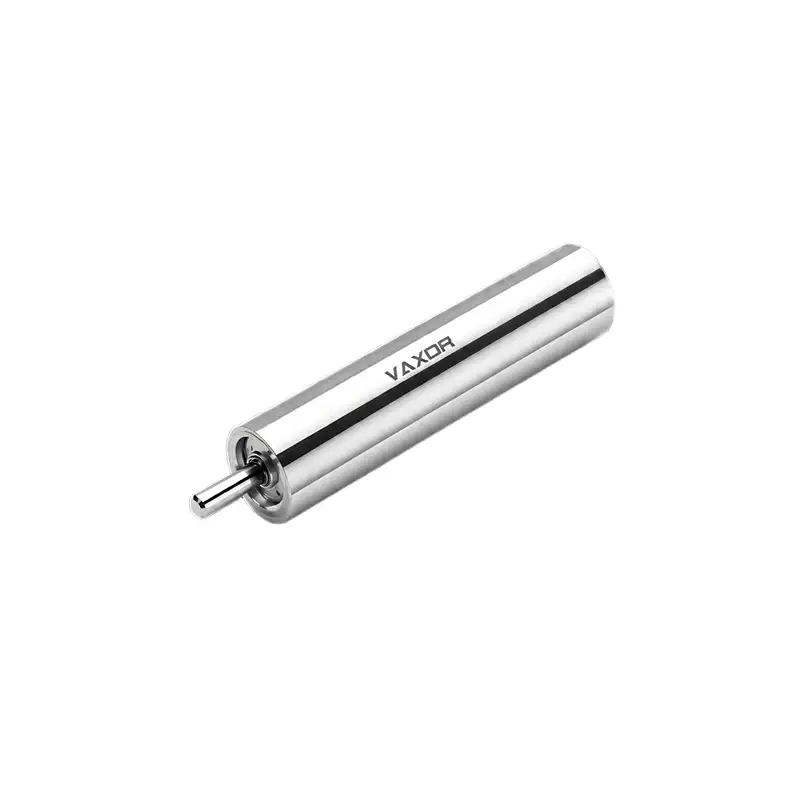
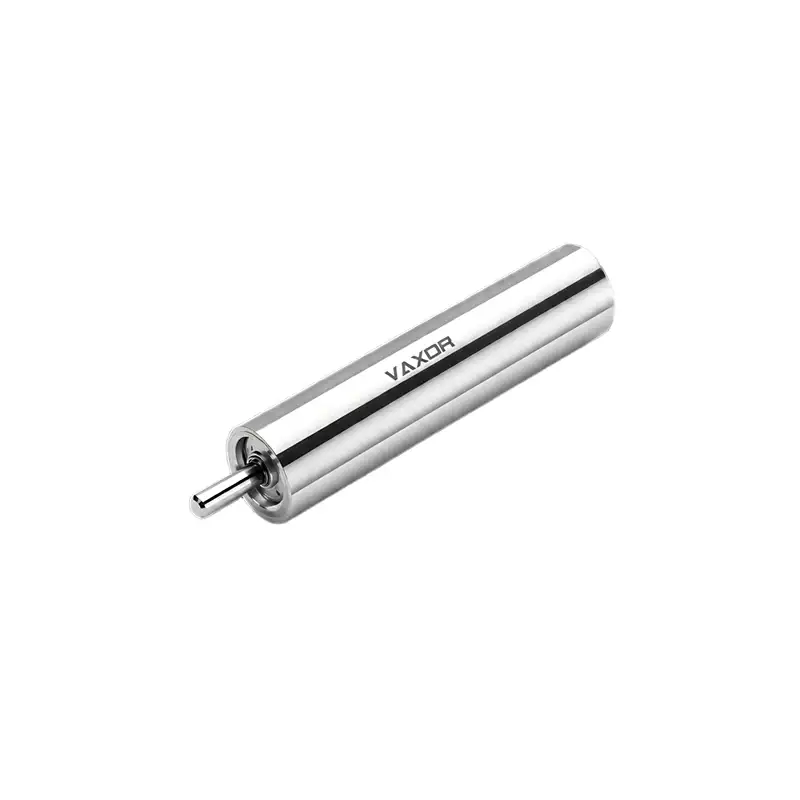
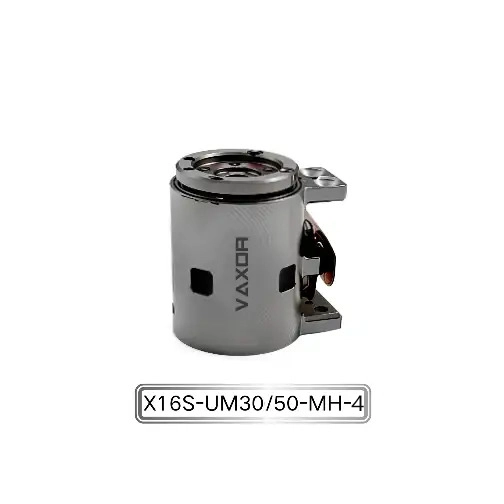
The Φ16mm Micro Joint Actuator is designed for applications where compact dimensions, torque output, and precise motion control must work together. With continuous torque of up to 200 mNm and initial torque of up to 400 mNm, it provides a practical example of how different torque requirements can be addressed within a miniature joint module.
Continuous Torque vs. Peak Torque: What Is the Difference?
Continuous torque and peak torque describe two different aspects of actuator performance.
Continuous torque refers to the torque an actuator can maintain under specified operating conditions without exceeding its allowable thermal and mechanical limits. It is particularly important for applications involving sustained movement, holding loads, or repeated operation over extended periods.
Peak torque refers to a higher torque level that an actuator can deliver for a limited duration or under specified transient conditions. It is useful when a robotic joint needs additional force during startup, acceleration, temporary resistance, or short-duration load changes.
For example, consider a robotic finger that needs to close around an object. The actuator may initially require additional torque to overcome mechanical resistance and begin movement. Once the finger reaches its target position, the required torque may decrease, depending on the grip force and mechanical design.
In this situation, peak torque supports short-duration demands, while continuous torque determines whether the actuator can sustain the required operation within its thermal limits.
These two specifications should therefore be evaluated together rather than treated as interchangeable performance indicators.
Why Compact Robotic Actuators Need a Balanced Torque Design
In larger industrial actuators, designers may have more flexibility to increase motor size, use larger gearboxes, or add cooling structures when additional torque is required.
Compact robotic joints have much less room for these adjustments. Their actuators must fit within restricted installation spaces while meeting requirements for weight, output force, response, and operating reliability.
Several factors make torque balancing particularly important.
Limited Installation Space
Robotic hands and compact joint mechanisms often contain multiple actuators positioned close to one another. Increasing actuator dimensions to achieve higher torque may interfere with adjacent joints, structural components, or internal wiring.
The challenge is to generate sufficient output within the available mechanical envelope.
Thermal Constraints
Motor losses generate heat during operation. Continuous torque is closely related to the actuator's ability to manage this heat over time.
If an actuator is repeatedly operated near or beyond its thermal limits, winding temperature may increase and affect performance, insulation life, and long-term reliability.
A higher peak torque rating does not remove the need for appropriate thermal management.
Weight Distribution
Adding mass to a robotic hand or moving joint can increase the load that the overall mechanism must handle.
For multi-joint systems, the weight of individual actuators accumulates. Heavier joints may also increase the inertia of moving structures, affecting acceleration, deceleration, and control requirements.
A suitable actuator should therefore provide sufficient torque without introducing unnecessary mass.
How to Determine the Required Continuous Torque
The first step in actuator selection is understanding the actual load conditions of the robotic mechanism.
Continuous torque requirements depend on several variables, including the mechanical structure, load distribution, transmission ratio, movement profile, and operating cycle.
For a rotating joint, the required torque may include contributions from:
External loads acting on the joint.
Gravity acting on moving components.
Friction in bearings and transmission mechanisms.
Inertial forces during acceleration.
Additional resistance from connected mechanisms.
These loads do not necessarily remain constant throughout a movement cycle.
For example, a robotic finger may require relatively little torque during unloaded movement but substantially more torque when holding an object. A compact robotic arm may experience different joint loads depending on its position and the distribution of payload mass.
Engineers should evaluate the most demanding sustained operating conditions rather than relying only on the maximum load encountered during a short movement.
It is also important to consider the actuator's specified output conditions. Torque ratings should be interpreted alongside speed, voltage, temperature, duty cycle, and transmission characteristics.
When Does Peak Torque Become Important?
Peak torque is particularly relevant during dynamic movements and temporary load changes.
Startup and Breakaway: A joint may require additional torque to overcome static friction and begin moving, especially when mechanical components are under load.
Acceleration: Rapid changes in angular velocity require torque to accelerate the moving mass. The required amount depends on the rotational inertia and the desired acceleration.
Object Gripping: In robotic hands, the actuator may encounter temporary resistance as a finger makes contact with an object. Additional torque may be needed to achieve the intended gripping force.
External Disturbances: Unexpected contact or changes in mechanical resistance may create short-duration increases in torque demand.
However, peak torque should not be treated as a permanent operating target. Repeated high-torque operation can increase heating and mechanical stress. Engineers should verify the permitted duration, frequency, and operating conditions associated with the manufacturer's peak torque specification.
A well-designed system uses peak torque where necessary while maintaining normal operation within the actuator's continuous capability.
Evaluating a Φ16mm Micro Joint Actuator for Robotic Applications
The Φ16mm Micro Joint Actuator from VAXOR is developed for highly integrated robotic applications that require compact dimensions and controlled joint movement.
Its model designation is X16S/L-UM30/50-MH-4, with the following technical specifications:
| Parameter | Specification |
|---|---|
| Model | X16S/L-UM30/50-MH-4 |
| Voltage | 12V / 24V |
| Gear Ratio | 30:1 / 50:1 |
| Continuous Torque | Up to 200 mNm |
| Initial Torque | Up to 400 mNm |
| Encoder | Absolute Magnetic Encoder |
| Communication | SPI |
| Weight | 24.3–26.1 g |
| Angular Accuracy | Up to 0.02° |
The combination of continuous and initial torque ratings provides flexibility for robotic mechanisms that experience different load conditions during operation.
The maximum continuous torque of 200 mNm provides a reference for evaluating sustained output requirements, while the initial torque of up to 400 mNm indicates additional output capability under the applicable operating conditions.
The two available gear ratios, 30:1 and 50:1, also provide configuration options for different motion requirements. The appropriate selection depends on the required output speed, torque, transmission efficiency, and dynamic response.
For applications where weight is a major design constraint, the module's 24.3–26.1g weight is another important consideration. It allows system designers to evaluate actuator placement and overall joint mass when developing multi-axis robotic structures.
How Gear Ratio Influences Torque and Motion Response
Gear ratio is an important factor when balancing continuous and peak torque.
In general, a higher reduction ratio increases the torque available at the output while reducing output speed, subject to transmission efficiency and the motor's operating characteristics.
A 30:1 configuration may be suitable when the application requires a different balance of speed and torque from a 50:1 configuration. However, the higher ratio should not automatically be considered the better option.
The final choice depends on the movement profile and mechanical load.
For example, a robotic finger designed for relatively fast movement may have different requirements from a joint intended to provide greater output force at a lower speed.
Engineers should consider:
Required joint angular velocity.
Expected continuous and transient loads.
Acceleration and deceleration requirements.
Transmission efficiency.
Mechanical backlash and positioning requirements.
Available control and power resources.
The gear ratio should be selected as part of the complete actuator and mechanism design rather than according to torque figures alone.
The Role of Feedback and Control in Torque Management
Mechanical specifications are only part of actuator performance. The control system also determines how effectively the available torque is used.
The Φ16mm Micro Joint Actuator integrates an absolute magnetic encoder and supports SPI communication, providing a feedback and interface foundation for compact robotic control systems.
An absolute encoder provides position information referenced to a defined angular position. This can support joint position feedback, motion coordination, and system initialization, depending on the encoder implementation and controller design.
For torque management, position feedback can help the control system monitor movement and adjust motor commands according to the desired trajectory.
In a robotic hand, for example, the controller may use position feedback to coordinate several joints during finger movement. When the finger encounters an object, the system can adjust its motion strategy according to the available sensing and control architecture.
It is important to distinguish position feedback from direct torque measurement. An absolute magnetic encoder measures angular position; it does not independently provide a direct measurement of output torque. Accurate torque control may require additional current-based estimation, mechanical modeling, or force and torque sensors, depending on the application.
Practical Design Considerations for Reliable Operation
Before integrating a compact actuator into a robotic system, engineers should evaluate more than its maximum torque rating.
First, establish the normal operating load and identify the maximum short-duration load. This helps determine whether the continuous torque rating is sufficient and whether peak torque is needed during specific movement stages.
Second, define the operating cycle. An actuator used intermittently may experience different thermal conditions from one operating continuously or performing frequent high-torque movements.
Third, evaluate the mechanical transmission and mounting structure. Poor alignment, excessive friction, and unsuitable bearing arrangements can increase the torque required from the actuator.
Fourth, verify the power supply and drive electronics. The 12V and 24V configurations should be matched with the appropriate motor driver and electrical system. Current capacity, wiring, and thermal conditions must also be considered.
Finally, conduct testing under representative loads. Startup behavior, sustained operation, repeated acceleration, and temperature changes should all be evaluated before finalizing the actuator configuration.
These steps help ensure that the selected actuator operates within its intended performance range rather than relying on peak specifications alone.
VAXOR's Approach to Compact Motion Technology
Founded in 2024 and headquartered in Suzhou, China, VAXOR develops micro joint actuators and ultra-micro coreless motors for robotics, medical devices, precision instruments, and intelligent equipment.
The company focuses on compact drive systems that combine motor design, miniature transmission mechanisms, precision manufacturing, and motion control requirements.
Its technology roadmap incorporates axial-flux motor technology, PCB/FPCB winding, optimized electromagnetic design, and miniature reduction mechanisms. These technologies are intended to address the engineering challenges associated with limited installation space, high torque density, fast response, and manufacturing consistency.
VAXOR is supported by a multidisciplinary team with expertise in motor design, precision manufacturing, structural engineering, robotics control, and intelligent manufacturing.
The team also has experience across prototype validation, pilot production, and batch manufacturing. This combination of technical development and engineering implementation is important for micro-drive products, where a design must not only demonstrate the required performance but also achieve consistent production quality.
Through its focus on compact and integrated motion solutions, VAXOR serves robotics companies, technology enterprises, and research institutions developing next-generation intelligent equipment.
Conclusion
Balancing continuous and peak torque is essential when selecting actuators for compact robotic systems. Continuous torque determines the actuator's sustained output capability, while peak torque provides additional capacity for temporary demands such as startup, acceleration, and gripping.
Neither specification should be considered independently. The actual selection must account for operating cycles, thermal conditions, gear ratio, mechanical loads, and control requirements.
The Φ16mm Micro Joint Actuator offers up to 200 mNm continuous torque and up to 400 mNm initial torque in a lightweight 24.3–26.1g module. Combined with 30:1 and 50:1 gear ratio options, an absolute magnetic encoder, and SPI communication, it provides a compact motion solution for dexterous hands and highly integrated robotic systems.
With its focus on micro-drive technology and engineering-oriented development, VAXOR continues to develop compact actuator solutions for robotics and other precision motion applications where torque, weight, and integration requirements must be considered together.