 Store
Store
 EN
EN CN
CN VI
VI IT
IT ES
ES TH
TH JA
JA PT
PT MS
MS KO
KO FR
FR DE
DE ID
IDWhen selecting a joint actuator for a robotic system, the torque number on a specification sheet is only useful when its operating condition is understood. A joint that repeatedly moves a load does not experience exactly the same mechanical demand at every moment. Starting from rest, accelerating a link, changing direction, or overcoming a short-duration resistance can require more torque than maintaining a continuous movement.
This distinction is particularly important when evaluating the Φ30mm Micro Joint Actuator. Designed for medium-to-high load applications, this actuator provides up to 1500 mNm of continuous torque and up to 2200 mNm of initial torque. The difference between these two figures gives engineers useful information about how the actuator can handle demanding moments in robotic motion.
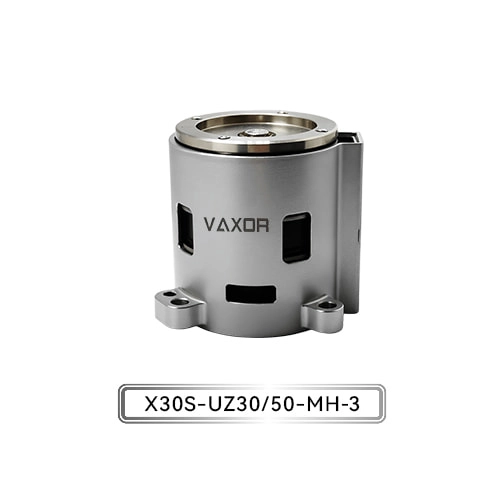
Initial Torque vs. Continuous Torque
Continuous torque describes the torque an actuator can provide during sustained operation under the specified operating conditions. It is the figure engineers may consider when evaluating whether a joint can repeatedly maintain or move a load over an extended period.
Initial torque serves a different purpose. It relates to the higher torque available during the beginning or short-duration portion of a movement. This can become important when a mechanism starts from rest, accelerates a connected link, changes direction, or encounters a temporary increase in resistance.
For the Φ30mm actuator, the specified values are:
Continuous torque: up to 1500 mNm
Initial torque: up to 2200 mNm
That means the actuator has a higher short-duration torque capability than its continuous operating torque. Engineers should therefore avoid treating 2200 mNm as the normal continuous operating output. Instead, it can be considered when analyzing transient motion requirements and peak mechanical demand.
This distinction is particularly useful in robotic joints because the torque requirement changes throughout a motion cycle.
Why Initial Torque Matters at the Start of Motion
Consider a robotic arm holding a link at a fixed position. When the joint begins moving, the motor and reduction mechanism need to overcome the initial mechanical resistance before the link reaches its intended motion.
The same principle applies when a robotic joint changes direction. The actuator may need to produce additional torque during acceleration before settling into a more stable operating condition.
A similar situation can occur in an exoskeleton joint. The actuator may remain relatively stable during one part of the user's movement but experience a higher demand during a transition between movement phases.
For these applications, looking only at continuous torque may provide an incomplete picture of the actuator's capabilities.
The 2200 mNm initial torque specification of the Φ30mm Micro Joint Actuator provides an additional reference point for engineers evaluating short-duration load requirements.
A Practical Example: Moving a Robotic Joint
Imagine a robotic joint connected to a mechanical arm. The actuator does not simply rotate at one constant speed from beginning to end.
A typical movement can include:
The joint starts from rest.
The actuator accelerates the connected mechanism.
The joint reaches a target speed.
The mechanism continues through its movement.
The joint decelerates.
The actuator changes direction or stops.
Each stage can impose a different mechanical requirement.
During the steady portion of the movement, continuous torque is the more relevant specification. During acceleration or other short-duration events, the required torque can temporarily rise.
This is why an actuator's initial torque capability should be considered alongside its continuous torque rather than replacing it.
For system designers, the important question is not simply "How much torque does the actuator have?" It is "How much torque is required during each part of the motion cycle?"
The Role of the 30:1 and 50:1 Gear Ratios
The Φ30mm actuator is available with 30 and 50 gear ratio options. Gear ratio selection affects how the actuator's motor output is transformed into joint output.
A higher reduction ratio can be useful when the application places greater emphasis on output torque and controlled joint movement. A lower ratio may be considered when the motion system places more emphasis on speed and dynamic response.
The appropriate choice depends on the mechanical load, joint speed, range of motion, acceleration requirements, and control strategy.
This is why the 30:1 and 50:1 configurations should not be treated simply as two interchangeable versions. The reduction ratio needs to be evaluated as part of the complete joint design.
For example, a joint carrying a relatively demanding mechanical load may have different requirements from a joint responsible for faster repetitive movement. Both may use the same actuator diameter, but the preferred gear configuration can be different.
Structural Rigidity Is Part of the Torque Equation
Torque capability alone does not determine how effectively an actuator performs in a robotic joint. The mechanical structure connecting the actuator to the joint also matters.
The Φ30mm platform is designed with high structural rigidity for medium-to-high load applications. This is important because the actuator needs to transfer its output through the mechanical structure without excessive deformation.
In a robotic joint, unwanted mechanical movement can affect positioning, response, and the consistency of repeated motion. A rigid structure provides a more stable mechanical connection between the actuator and the driven component.
This becomes especially relevant for humanoid robots and exoskeletons, where the actuator may be integrated directly into a compact joint assembly.
The objective is not simply to increase the torque figure. The complete drive system needs to transfer torque effectively while maintaining the mechanical behavior expected by the control system.
Absolute Magnetic Encoder for Closed-Loop Motion
The Φ30mm Micro Joint Actuator also incorporates an absolute magnetic encoder. This provides position feedback to the control system and allows the actuator's actual motion to be monitored.
For robotic joints, feedback is important because commanded movement and actual mechanical movement are not always identical. Loads, acceleration, friction, mechanical tolerances, and external forces can influence the result.
An absolute encoder provides the control system with positional information that can be used as part of the joint's motion-control loop.
Combined with the actuator's torque capability, this creates a more complete motion-control platform: the motor and reduction mechanism generate mechanical output, while the encoder provides feedback about joint position.
The communication interface is CAN FD, allowing the actuator module to exchange control and feedback information with the larger robotic control architecture.
CAN FD for Distributed Robotic Joints
A robot with multiple actuated joints needs more than individual motors. Each actuator becomes part of a larger control network.
CAN FD is designed for communication between electronic control nodes and provides a practical interface for distributed motion systems. In a humanoid robot, for example, multiple joint modules may need to communicate with a central or distributed controller.
This makes the communication interface an important part of actuator selection.
Instead of treating the actuator as an isolated motor, engineers can consider it as a compact integrated joint module that combines mechanical output, position feedback, and communication.
For the Φ30mm Micro Joint Actuator, the combination of an absolute magnetic encoder and CAN FD is particularly relevant when designing multi-joint robotic systems that require coordinated movement.
Where a 2.2 Nm Initial Torque Capability Can Be Useful
The actuator's initial torque capability can be relevant to several types of robotic movement.
Humanoid robots may require additional torque when a joint begins moving a limb or changes direction. Exoskeletons may experience changing mechanical loads as the user's body moves through different phases of a motion. Other robotic joints can experience transient loads when accelerating an attached mechanism.
These are not necessarily continuous high-load conditions. Instead, they are moments where the mechanical demand temporarily rises.
The 2200 mNm initial torque specification therefore needs to be considered together with the 1500 mNm continuous torque specification, gear ratio, joint mechanics, duty cycle, and control requirements.
Engineers should still calculate the actual load and torque requirements of their own mechanism rather than selecting an actuator based on the peak number alone.
Compact Packaging Without Ignoring System Requirements
The actuator weighs approximately 123–133 g and operates from a 12–18 V supply. These specifications are relevant when the actuator is being integrated into compact robotic mechanisms.
Weight becomes increasingly important when multiple actuators are distributed throughout a robot. Each joint contributes not only its own mass but also affects the loads carried by other joints.
For this reason, actuator selection is often a system-level decision. Engineers need to consider torque, weight, voltage, gear ratio, encoder feedback, communication, mechanical rigidity, and physical integration together.
The Φ30mm format provides a compact package for applications where the available joint space is limited but the required mechanical output is beyond what smaller micro actuators can provide.
From Prototype Validation to Robotic Production
Actuator specifications are only one part of a successful robotics project. For manufacturers and engineering teams, the transition from prototype to repeatable production also requires consistency in motor design, reduction mechanisms, electronics, mechanical assembly, and testing.
VAXOR was founded in 2024 and is headquartered in Suzhou, China, with a focus on micro joint actuators and ultra-micro coreless motors for robotics, medical devices, precision instruments, and intelligent equipment.
Its multidisciplinary team covers motor design, precision manufacturing, structural design, robotics control, and intelligent manufacturing. The company combines axial-flux motor technology, PCB/FPCB winding, electromagnetic optimization, and miniature reduction mechanisms to develop compact motion solutions with high power density and fast response.
This engineering approach is relevant when an actuator needs to move beyond laboratory validation and into a repeatable robotic platform.
Selecting the Right Torque Specification for a Robotic Joint
The most useful way to evaluate an actuator is to map its specifications against the actual motion profile of the target joint.
For continuous movement, engineers should examine the required sustained torque and operating duty cycle. For acceleration and transient events, initial or peak torque becomes more important. Gear ratio should then be selected according to the required balance between output torque and speed.
The mechanical structure must also be able to transfer the generated torque without excessive deformation. Finally, encoder feedback and communication need to match the control architecture of the robot.
The Φ30mm Micro Joint Actuator brings these elements together in a compact module, with up to 1500 mNm continuous torque, up to 2200 mNm initial torque, 30/50 gear ratios, an absolute magnetic encoder, CAN FD communication, and a weight of 123–133 g.
For humanoid robots, exoskeletons, and other medium-to-high load robotic joints, understanding the difference between continuous and initial torque provides a more practical starting point for actuator selection than looking at a single maximum torque figure.