 Store
Store
 EN
EN CN
CN VI
VI IT
IT ES
ES TH
TH JA
JA PT
PT MS
MS KO
KO FR
FR DE
DE ID
IDWhen a motor diameter reaches only a few millimeters, conventional design methods become increasingly difficult to optimize. There is very little room for winding, electrical connections, heat management, and mechanical support, while the motor still needs to provide predictable speed and torque. At this scale, the winding structure is not just a manufacturing detail. It directly affects how the motor can be packaged and produced.
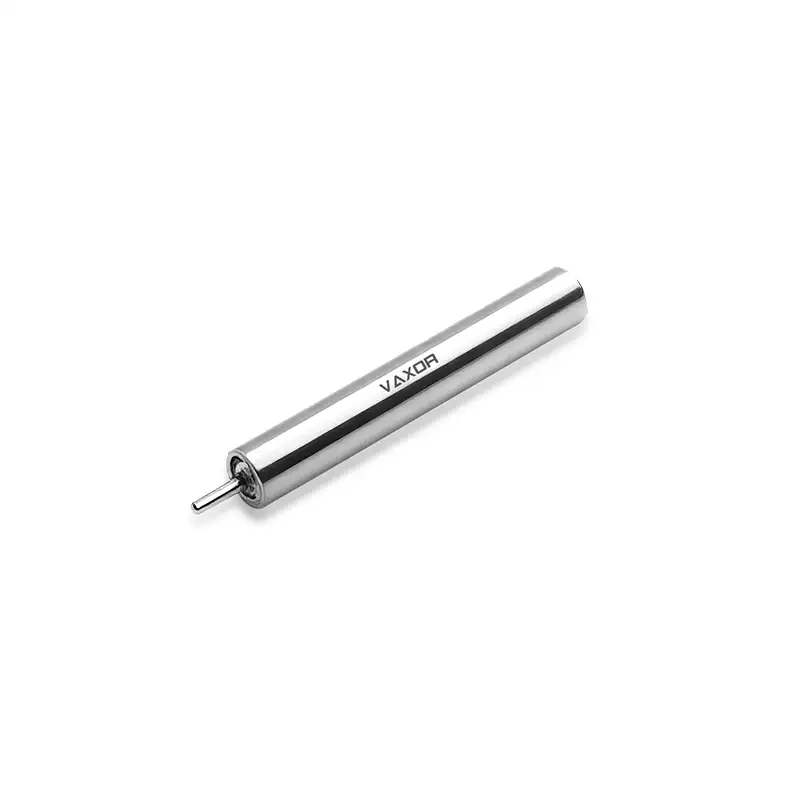
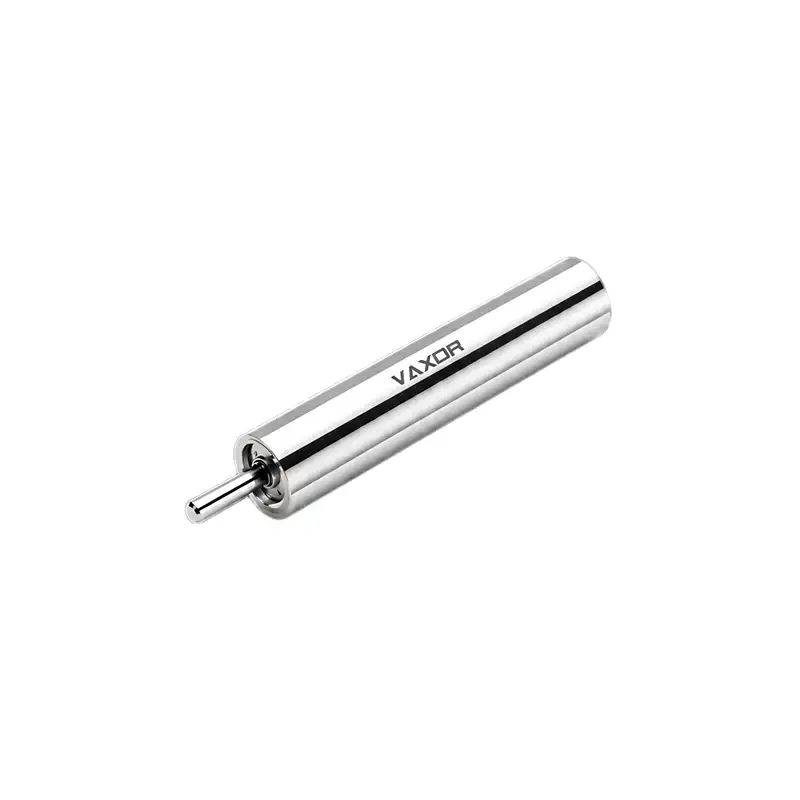
This is where FPCB winding technology becomes relevant. By using a flexible printed circuit approach for the winding structure, engineers can address some of the space and consistency challenges associated with ultra-micro motor development. The φ5mm Ultra-micro Brushless Coreless Motor applies this approach together with AI-optimized design to create a compact motor intended for applications such as UAVs, wearables, and other miniature equipment.
Why Winding Becomes Difficult at the 5mm Scale
In a larger motor, there is enough physical space to arrange the winding structure without making every millimeter of the design critical. As the motor becomes smaller, the available winding area decreases rapidly.
The designer has to consider conductor arrangement, electromagnetic performance, manufacturing repeatability, insulation, connections, and the available space inside the motor at the same time. A small change in the winding structure can influence electrical characteristics and the overall motor architecture.
For a Φ5mm motor, these constraints become particularly important. The goal is not simply to fit a winding into a smaller housing. The winding needs to work as part of a complete miniature motor system.
FPCB winding provides a structured approach to this problem. Instead of treating the winding as a conventional wire arrangement that must be manually optimized within a very limited space, the flexible printed circuit can be engineered as part of the motor's electromagnetic and manufacturing design.
What FPCB Winding Changes in a Micro Motor
The main value of FPCB winding at this scale is design control.
A printed circuit-based winding structure can be precisely defined during the design process. This gives engineers a way to control the arrangement of the conductive paths and integrate the winding concept with the compact geometry of the motor.
For ultra-micro applications, this matters because there is little room to compensate for manufacturing variation. When the motor diameter is only 5mm, even small dimensional differences can become significant relative to the available internal space.
The φ5mm Ultra-micro Brushless Coreless Motor combines FPCB winding with an AI-optimized design approach. The combination is intended to address both the physical limitations of miniature motor construction and the need to optimize electromagnetic performance within those limitations.
Rather than increasing motor size to gain more design space, the approach focuses on making better use of the space that is already available.
Why AI Optimization Is Useful at This Scale
AI optimization is most useful when a design involves many variables that interact with each other.
For a miniature motor, these variables can include electromagnetic parameters, winding configuration, dimensions, operating speed, torque requirements, and manufacturing constraints. Changing one parameter can affect several others, making manual trial-and-error increasingly inefficient.
At the Φ5mm scale, optimization therefore needs to consider the motor as a complete system rather than optimizing a single specification in isolation.
For example, a design intended to achieve high rotational speed still needs to maintain an appropriate torque output and remain manufacturable. Increasing one performance parameter without considering the winding structure, electrical characteristics, or production process may create a motor that performs well in simulation but is difficult to produce consistently.
The combination of FPCB winding and AI-assisted optimization provides a way to evaluate these relationships earlier in the design process.
55,000 RPM Requires More Than a Small Motor
The G05P-VW00-QZ-1 is specified with a 55,000 rpm no-load speed and a 30,000 rpm nominal speed.
These two figures should not be treated as interchangeable. The no-load speed represents the rotational speed without the normal mechanical load, while nominal speed provides a more practical reference for application design.
This distinction is important for engineers working with high-speed miniature mechanisms. A system designed around the 55,000 rpm figure without considering the actual load could lead to incorrect expectations for operating performance.
The 30,000 rpm nominal speed provides a more useful starting point when evaluating how the motor will interact with the driven mechanism. Bearing selection, transmission design, rotating components, and control requirements all need to be considered according to the actual operating point.
For UAV and miniature motion applications, this high-speed capability can be useful where the available installation space is limited but the drive still needs to respond quickly.
Balancing 0.40 mNm Torque With a 2.6g Motor
Miniaturization is not simply about reducing diameter. The motor also needs to provide enough torque for the intended mechanical load.
The G05P-VW00-QZ-1 provides a nominal torque of 0.40 mNm and a listed stalling torque of 0.80 mNm, with a torque constant of 0.65 mNm/A.
The 0.40 mNm nominal torque should be considered together with the application's acceleration requirements, friction, rotating inertia, transmission efficiency, and operating speed. The 0.80 mNm stalling torque is a reference for stall conditions rather than a target operating point.
At the same time, the motor weighs only 2.6g. This combination is relevant for equipment where motor mass has a direct effect on the overall system.
A lighter drive can reduce the burden on moving structures and help engineers allocate more of the available weight budget to batteries, sensors, electronics, structural components, or other functional parts.
Why UAVs Benefit From Small and Lightweight Motors
UAVs are a practical example of why motor size and weight need to be evaluated together.
Every additional component contributes to the overall mass of the aircraft. A heavier drive can increase the requirements placed on the supporting structure and power system. At the same time, the motor must still provide the required rotational performance for the mechanism in which it is installed.
A 5mm motor weighing 2.6g offers a compact option when installation space and mass are both constrained.
The high-speed characteristics of the φ5mm Ultra-micro Brushless Coreless Motor can also make it relevant to miniature mechanisms where fast rotation is required. However, the actual suitability depends on the load, duty cycle, driver, mechanical transmission, and operating environment of the UAV.
The important point is that motor selection should be made at the system level rather than based only on the smallest available diameter.
Wearable Devices Have Similar Constraints
Wearable equipment presents another demanding environment for miniature motors.
A wearable product must remain compact enough to be comfortable and practical, while the internal mechanism may still need controlled movement. There is limited room for motors, batteries, sensors, circuit boards, and mechanical structures.
Reducing the motor footprint can therefore create additional freedom for the rest of the product.
The Φ5mm format is particularly relevant when designers cannot simply enlarge the enclosure to accommodate a conventional motor. The 2.6g weight can also be considered when the device is worn directly on the body or incorporated into a moving component.
In these applications, FPCB winding is not valuable simply because it is a newer winding method. Its relevance comes from its ability to support a highly compact motor architecture where space and manufacturing consistency are both important.
Manufacturability Matters as Much as Performance
A miniature motor that performs well in a prototype is not automatically suitable for volume production.
As dimensions become smaller, manufacturing repeatability becomes increasingly important. Winding, assembly, alignment, electrical connections, and inspection all have to be controlled consistently if the motor is going to move from engineering samples to production.
This is one reason the balance between performance, cost, and manufacturability matters for the Φ5mm motor.
The design approach used in the φ5mm Ultra-micro Brushless Coreless Motor combines FPCB winding technology with AI-optimized development to address both performance and production considerations. For OEM projects, this can be more useful than pursuing a single extreme specification without considering whether the design can be reproduced reliably.
From Micro Motor Design to Production
VAXOR develops ultra-micro coreless motors and micro joint actuators for robotics, medical devices, precision instruments, and intelligent equipment.
Its engineering team covers motor design, precision manufacturing, structural design, robotics control, and intelligent manufacturing. This multidisciplinary structure is relevant to miniature motor development because the final product depends on more than electromagnetic design alone.
For a Φ5mm motor, the transition from prototype to production requires attention to manufacturing processes, dimensional consistency, material selection, electrical performance, and application-specific testing.
The combination of engineering development and manufacturing capability therefore becomes an important part of evaluating a micro motor supplier.
When FPCB Winding Becomes a Practical Design Choice
FPCB winding is particularly worth considering when several requirements appear together: very limited installation space, high rotational speed, low motor mass, repeatable production, and the need to optimize the motor around a specific application.
It does not mean that every miniature motor requires an FPCB winding structure. The right winding approach depends on the motor architecture, target performance, production requirements, and application.
For a 5mm-class motor, however, the technology provides an interesting way to address the physical limitations of conventional miniature winding arrangements.
The φ5mm Ultra-micro Brushless Coreless Motor brings these design considerations together in a 6V package with 55,000 rpm no-load speed, 30,000 rpm nominal speed, 0.40 mNm nominal torque, 0.80 mNm stalling torque, and 2.6g weight.
For UAVs, wearables, and other compact motion systems, the value of the motor is not simply that it is small. The more important question is whether its winding technology, speed, torque, weight, and manufacturability fit the complete system. At the Φ5mm scale, that is where FPCB winding becomes a meaningful part of the motor design rather than just a manufacturing detail.