 Store

 EN
 CN
 VI
 IT
 ES
 TH
 JA
 PT
 MS
 KO
 FR
 DE
 ID
Wearable devices place demanding requirements on miniature drive systems. Products such as compact haptic modules, personal care equipment, wearable robotic components, and portable precision instruments need motors that fit into restricted spaces while delivering predictable motion. However, reducing motor size does not automatically eliminate vibration. At high rotational speeds, even small mechanical imbalances, mounting deviations, or transmission errors can become noticeable in the complete device.
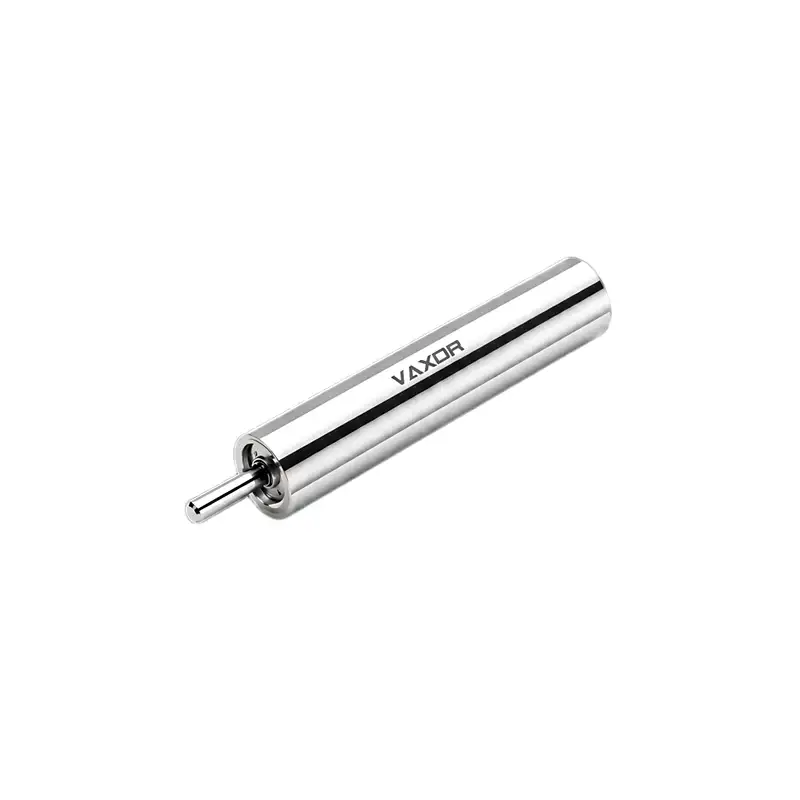
For designers working with miniature drive systems, vibration control requires more than selecting a motor with suitable speed and torque specifications. Motor construction, shaft alignment, mounting stiffness, drive settings, and the surrounding housing all influence the final result. The φ5mm Ultra-micro Brushless Coreless Motor from VAXOR provides a compact drive option for applications where installation space and weight are limited. Understanding how to integrate this type of motor can help engineers manage vibration throughout the product design process.
Why Vibration Matters in Wearable Devices
Unlike many industrial machines, wearable products operate close to the user's body. This makes vibration a practical design concern rather than simply a mechanical measurement.
In a wearable device, unwanted vibration can affect perceived comfort, create audible noise, interfere with nearby sensors, and reduce the perceived quality of the product. In precision equipment, vibration may also influence measurement stability or the repeatability of small mechanical movements.
The source of vibration is not always the motor itself. It may originate from rotor imbalance, bearing or shaft-related issues, an uneven load, loose mounting components, or a housing that amplifies mechanical excitation. In some designs, vibration generated by the motor is transmitted through the device structure and becomes more noticeable at the contact surface.
Therefore, engineers should evaluate vibration at both the motor level and the complete-device level. A motor that performs well on a test fixture may behave differently after installation in a compact enclosure.
Understanding the Relationship Between Speed and Vibration
Rotational speed is an important factor in miniature motor integration. As speed increases, small mechanical imperfections can produce more frequent excitation. The effect depends on the motor's construction, rotating components, mounting conditions, and external load.
The G05P-VW00-QZ-1 model has a specified no-load speed of 55,000 rpm and a nominal speed of 30,000 rpm at 6 V. These figures describe different operating conditions. The no-load speed is measured without the normal mechanical load applied, while the nominal speed represents the specified rated operating condition.
For wearable applications, the motor should be evaluated at the speed range required by the actual mechanism. Operating continuously near the maximum no-load speed is not necessarily appropriate for every application. The required speed should be determined by the function of the device, the connected load, and the manufacturer's operating specifications.
Engineers should also consider the mechanical components connected to the motor. A small eccentric load, an imperfect coupling, or a poorly aligned shaft can introduce additional vibration. At high rotational speeds, these issues may become more apparent.
Motor Balance and Rotating Component Quality
Rotor balance is one of the basic considerations in high-speed motor design. When the rotating assembly has uneven mass distribution, centrifugal forces can generate vibration during operation.
In a miniature motor, the available space for rotating components is extremely limited. Manufacturing consistency and assembly precision therefore matter. Small deviations in component geometry or mass distribution may affect the behavior of the rotating assembly.
When evaluating a motor for a wearable device, engineers should consider:
Rotor balance and manufacturing consistency.
Shaft straightness and dimensional accuracy.
Quality and alignment of rotating components.
Consistency of assembly between production batches.
Vibration behavior across the intended operating speed range.
These factors should be assessed through actual test data where available. A motor's diameter, weight, or rated speed alone cannot establish its vibration performance.
The φ5mm Ultra-micro Brushless Coreless Motor uses a compact design intended for space-constrained applications. Its specifications include a 2.6 g weight and a 5 mm diameter. These characteristics can help product designers manage the mass and installation space of a wearable drive module, while mechanical balance and vibration levels should still be verified during integration.
Mounting Design and Structural Vibration Transmission
Even when a motor's internal rotating assembly is well balanced, the mounting structure can influence the vibration experienced by the user.
A motor installed in a thin plastic enclosure, for example, may transfer mechanical excitation into the housing. If the housing has a structural resonance close to the motor's operating frequency or one of its vibration components, the resulting response may become more noticeable.
Mounting design should therefore consider both mechanical stability and vibration transmission.
A mounting structure needs enough rigidity to hold the motor in its intended position. At the same time, the connection between the motor and the device housing should be evaluated to determine whether it transmits unwanted vibration.
Depending on the product design, engineers may consider controlled contact surfaces, suitable mounting materials, mechanical isolation features, and changes to the housing structure. However, soft mounting materials should not be selected without testing. Excessive flexibility can introduce movement, affect alignment, or create unwanted mechanical resonance.
For wearable products, the best mounting solution is usually determined through testing of the complete assembly rather than selecting an isolation material based only on its nominal properties.
Shaft Alignment and Load Matching
Shaft alignment is another important factor in reducing unwanted vibration. If the motor shaft and the connected mechanical component are not properly aligned, additional radial or axial forces may be introduced.
This can occur when connecting the motor to a small gear stage, eccentric mechanism, pump component, or other rotating load. Misalignment may increase friction, create uneven loading, and affect the operating life of the connected components.
Engineers should check the following during mechanical integration:
Alignment between the motor shaft and the driven component.
Concentricity of couplings and transmission parts.
Radial and axial loading at the motor shaft.
Fit and retention of connected components.
Mechanical clearance throughout the operating cycle.
Load matching is equally important. The motor's nominal torque is specified as 0.40 mNm, with a stalling torque of 0.80 mNm. The nominal torque provides a reference for evaluating normal operating requirements, while the stalling torque should not be treated as a continuous working target.
An unsuitable load can cause unstable operation or excessive mechanical stress. Selecting a motor based on the required speed alone may therefore lead to problems after the device is assembled.
Drive Control and Operating Speed Adjustment
Mechanical design is only part of vibration management. The motor driver and control strategy can also influence how the motor behaves during startup, acceleration, and steady operation.
Abrupt changes in the drive command may produce sudden changes in motor response. Depending on the connected mechanism, these transitions can create noticeable mechanical excitation. A controlled acceleration profile may help reduce abrupt motion during startup and speed changes.
For the 6 V G05P-VW00-QZ-1 model, the torque constant is specified as 0.65 mNm/A. This parameter provides a reference for understanding the relationship between motor current and electromagnetic torque under the applicable motor convention.
Engineers can use the torque constant as part of their initial drive-system evaluation, but it should not replace the manufacturer's current and thermal specifications. The appropriate driver settings also depend on the motor's electrical configuration and supported commutation method.
For wearable applications, the control system should be tested under representative operating conditions. This includes startup, speed adjustment, repeated operating cycles, and changes in mechanical resistance. Monitoring current, speed, and temperature can help identify operating conditions that may contribute to excessive mechanical or thermal stress.
FPCB Winding and Compact Motor Manufacturing
Manufacturing methods also influence the consistency of miniature motor performance. When a motor is designed for a 5 mm diameter, the winding structure and internal component arrangement must fit within a very limited space.
The φ5mm Ultra-micro Brushless Coreless Motor combines FPCB winding technology with an AI-optimized design approach. FPCB-based winding can support compact winding layouts and repeatable manufacturing processes, while design optimization can assist engineers in evaluating electromagnetic and structural design choices.
For wearable product developers, manufacturing consistency is important because a motor is not evaluated only as an individual sample. It must also maintain suitable performance across production batches.
Vibration-related inspection can be incorporated into motor validation and quality evaluation. Depending on the application, this may include rotational testing, vibration measurement, speed consistency checks, and inspection of mechanical interfaces.
The final evaluation should use defined test conditions. Speed, mounting arrangement, applied load, measurement location, and operating duration should be recorded so that results can be compared reliably.
VAXOR's Approach to Miniature Drive Development
Founded in 2024 and headquartered in Suzhou, China, VAXOR develops micro joint actuators and ultra-micro coreless motors for robotics, medical devices, precision instruments, and intelligent equipment.
The company's technical team brings together expertise in motor design, precision manufacturing, structural engineering, robotics control, and intelligent manufacturing. This multidisciplinary approach supports the development process from prototype validation and pilot production to batch delivery.
VAXOR's technology roadmap focuses on compact size, high performance, and scalable production. Its development work includes axial-flux motor technology, PCB and FPCB winding, optimized electromagnetic design, and miniature reduction mechanisms.
For wearable and other miniature applications, these engineering areas need to work together. A compact motor must meet the required electrical and mechanical specifications while remaining compatible with the product's installation structure and manufacturing process.
A Practical Vibration Evaluation Checklist
Before approving a miniature motor for a wearable product, engineers should evaluate the motor and the complete device under realistic conditions.
Confirm the required operating speed and mechanical load rather than relying only on the no-load speed.
Check rotor balance, shaft condition, and rotating component consistency.
Verify shaft alignment and the mechanical fit of connected components.
Evaluate mounting rigidity and vibration transmission through the housing.
Test startup, acceleration, steady operation, and repeated movement cycles.
Measure vibration at both the motor mounting point and relevant user-contact surfaces.
Monitor current and temperature during representative operating conditions.
Compare samples under consistent test conditions to evaluate manufacturing repeatability.
These checks help identify whether vibration originates from the motor, the mounting structure, the transmission mechanism, or the overall device assembly.
Building Quieter and More Stable Wearable Drive Systems
Vibration control in wearable devices is a system-level engineering task. Motor balance, shaft alignment, mounting design, load matching, and drive control all contribute to the final operating behavior. Addressing these factors early can reduce the need for major mechanical changes after the product has entered the prototype or production stage.
With a 5 mm diameter, 2.6 g weight, 6 V operating voltage, and nominal torque of 0.40 mNm, the φ5mm Ultra-micro Brushless Coreless Motor provides a compact drive option for wearable devices and other miniature applications. Its 55,000 rpm no-load speed and 30,000 rpm nominal speed offer reference points for evaluating the required operating range.
For developers seeking compact motor solutions, VAXOR combines micro motor engineering, FPCB winding technology, and manufacturing capabilities to support the development of space-constrained motion systems. Careful integration and vibration testing remain essential to achieving stable performance in the final wearable product.